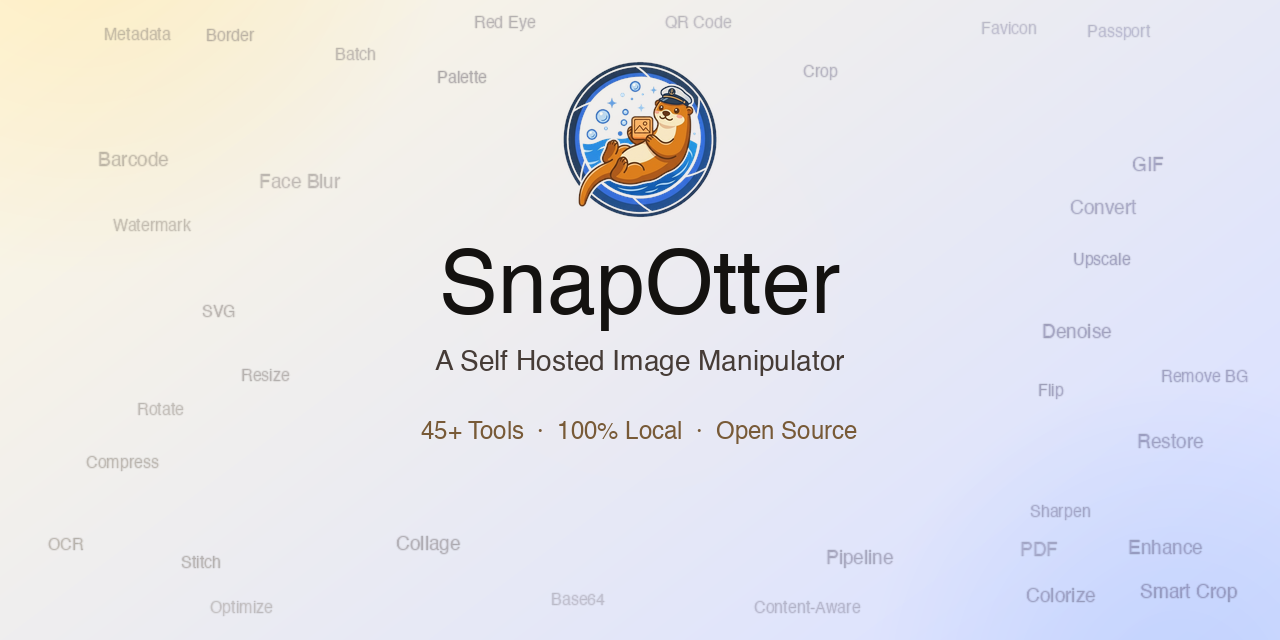
SnapOtter: A Self Hosted Image Manipulator - 45+ tools, local AI, and pipelin
SnapOtter provides a self-hosted suite for image editing with 45+ tools and local AI. It offers privacy-focused solutions for efficiency.
Continue Reading11 posts tagged with this
SnapOtter provides a self-hosted suite for image editing with 45+ tools and local AI. It offers privacy-focused solutions for efficiency.
Continue Reading
Windrose-Game-Dedicated-Server is a Docker container that enables Linux-based hosting of Windrose’s Windows-only dedicated server using Wine and SteamCMD. It’s designed for players and communities see...
Continue Reading
Tired of wrestling with Tailscale or WireGuard just to expose self-hosted services? VX6 is a lightweight, MIT-licensed, IPv6-native fabric that lets your Raspberry Pi or VPS announce a globally routab...
Continue Reading
Tired of guessing which services are actually communicating in your homelab? HomeLabInfo creates a living map by analyzing real network traffic—not just pings or health checks. Spot silent failures, d...
Continue Reading
Tired of syncing Chrome data with Google? SelfSync is a lean, Rust-built, self-hosted sync server that works natively with Chrome v120+, letting you sync bookmarks, history, and passwords—without Goog...
Continue Reading
Hit the 'NAT punch-through wall' with self-hosted Paseo? paseo-relay is a lightweight, zero-dependency Go relay that rescues WebRTC calls behind restrictive firewalls, CGNAT, and mobile carriers — no ...
Continue Reading
Tired of over-engineering with PostgreSQL or Redis for simple persistence? YantrikDB Server is a minimal, zero-config Rust database built for config snapshots and ephemeral keys—running reliably in pr...
Continue Reading
Tired of nginx config spaghetti and broken Let’s Encrypt renewals? This post shows how Traefik v3.1 auto-discovers services, enforces TLS by default, and eliminates manual routing—so you can run Home ...
Continue Reading
Tired of leaking context and overpaying for Honcho’s opaque cloud memory? honcho-self-hosted is a lean, shell-based shim that swaps in your own Redis backend—no code changes, no forks, just 300 lines ...
Continue Reading
Tired of building custom SSH wrappers or bloated REST APIs for remote command execution? Meet codec — a lean, dependency-light Python framework for secure, scriptable automation across homelab nodes. ...
Continue Reading