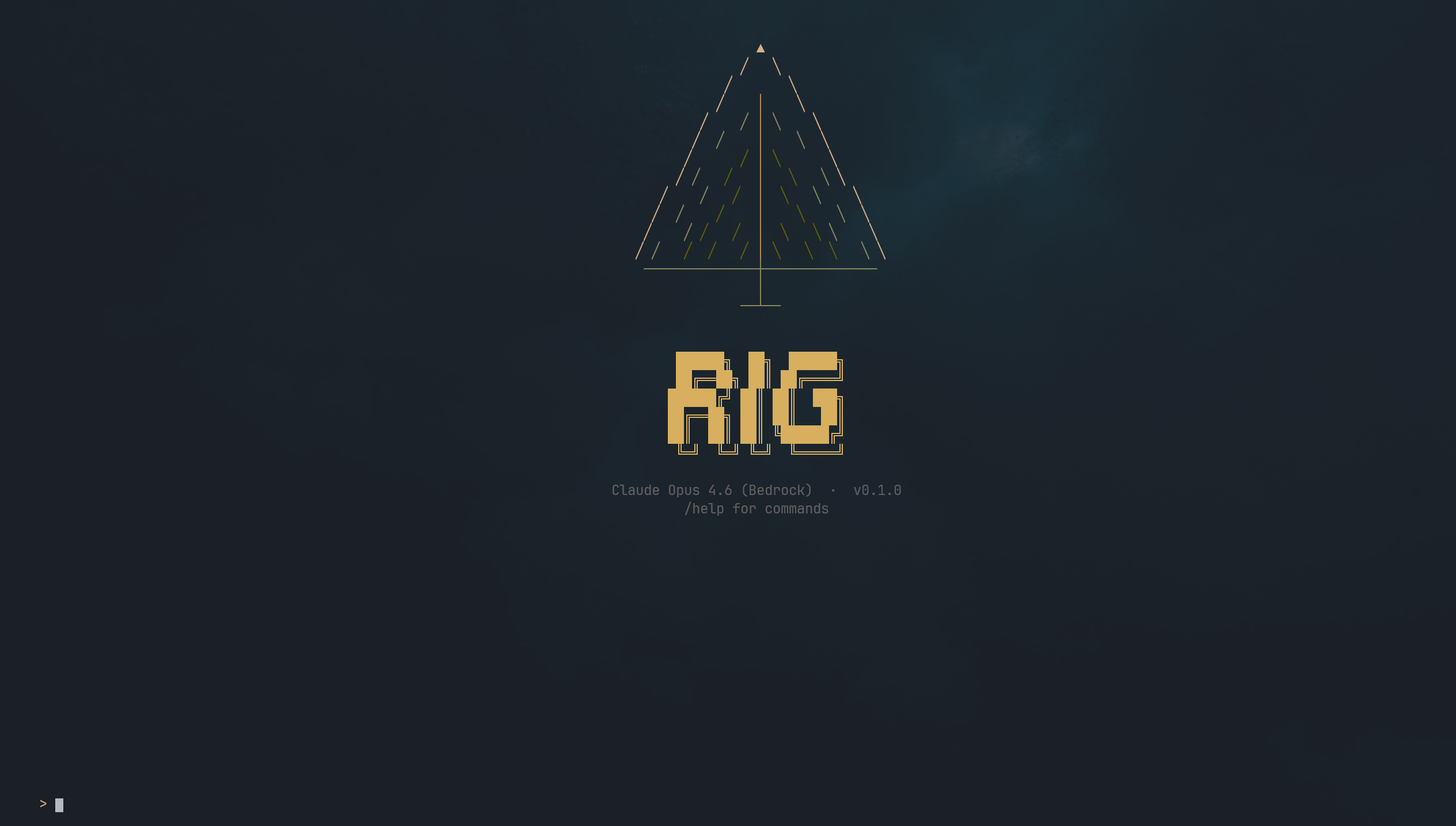
In the current landscape of AI-assisted software development, most coding agents are built with high-level languages and come bundled with extensive dependencies. This often translates to large footprints, complex installation processes, and runtime requirements that can be cumbersome on minimal systems or in containerized environments. Developers who prioritize simplicity, portability, and low overhead are increasingly seeking tools that break away from this trend. A new entry, rig, addresses these pain points directly by delivering an AI coding agent as a single, zero-dependency binary written in C. With only 23 stars on GitHub, it remains a niche project, but its design philosophy offers a compelling alternative for those who need a lightweight, provider-agnostic assistant that can run almost anywhere without a heavyweight runtime.
Enter rig
rig is an AI coding agent implemented entirely in C. Its core promise is straightforward: provide coding assistance capabilities while maintaining a minimal profile. The binary is self-contained, requiring no external libraries or runtime environments beyond the operating system itself. This makes it exceptionally portable across different UNIX-like systems and easy to deploy in constrained settings. The tool is designed to interface with every major large language model (LLM) provider, allowing users to leverage services from OpenAI, Anthropic, Google, and others through a unified interface. By avoiding language-specific ecosystems, rig sidesteps the dependency bloat that plagues many similar tools. Its single-file distribution means there is no package manager overhead, no virtual environments, and no risk of version conflicts. For developers who already work in compiled languages or maintain lean Docker images, rig can be integrated with virtually no additional cost.
Under the hood
The choice of C as the implementation language is central to rig's philosophy. The codebase compiles to a native executable that links only against the standard C library, ensuring zero runtime dependencies beyond what the host system already provides. This design eliminates the need for Python, Node.js, or other runtimes that many AI coding tools depend on. Communication with LLM providers occurs over HTTP, likely using plain sockets or a lightweight client library; the specifics are not detailed in the available metadata, but the binary's self-sufficiency suggests it bundles any necessary protocol handling internally. The tool likely reads code context from files or standard input and streams responses back, functioning as a command-line assistant. Its small size and lack of external dependencies make it an ideal candidate for static linking and inclusion in read-only media or air-gapped environments where installing additional software is undesirable.
Running it
To use rig, you must first build it from source. The process is typical for a C project:
git clone https://github.com/SrihariLegend/rig.git
cd rig
make
The make command compiles the source and produces the rig binary in the project directory. If your system lacks a C compiler, you will need to install one (e.g., build-essential on Debian-based systems or Xcode command line tools on macOS). Once built, the binary can be moved to any directory in your PATH for easy access. Configuration usually involves setting environment variables for the LLM provider API keys, such as OPENAI_API_KEY or ANTHROPIC_API_KEY. The exact variables are documented in the repository's README, but they follow the standard pattern used by most LLM tools. Because rig is a single binary, updating to a new version is as simple as repeating the build process and replacing the old executable.
Honest take
rig occupies a specific niche: developers who need a functional AI coding assistant without the overhead of traditional runtimes. Its C implementation ensures it runs almost anywhere, and its provider-agnostic design gives users the freedom to choose or switch models. However, this minimalism comes with trade-offs. The tool may lack some of the advanced features, IDE integrations, or user-friendly interfaces found in larger, ecosystem-bound projects. Its development is also relatively early, as indicated by the modest star count and the absence of widespread community contributions. For users who prioritize a small footprint and maximum portability over polish, rig is a practical choice. It demonstrates that even in the age of heavyweight AI tools, there is still room for lean, dependency-free utilities. The source code is available on GitHub for those who want to inspect, modify, or contribute.
Comments