Theproject HashDump‑BypassEDR sits at the intersection of Windows privilege escalation and EDR evasion, offering a lightweight method to extract LSA secrets by abusing the built‑in reg.exe utility. Written in PowerShell and C, the toolchain transforms registry exports into binary blobs that can be fed to standard credential‑dumping utilities, all while staying under the radar of typical security monitoring. With 229 stars on GitHub, the repository positions itself as a practical, proof‑of‑concept alternative to more heavyweight dumping approaches, emphasizing speed of deployment over extensive feature sets.
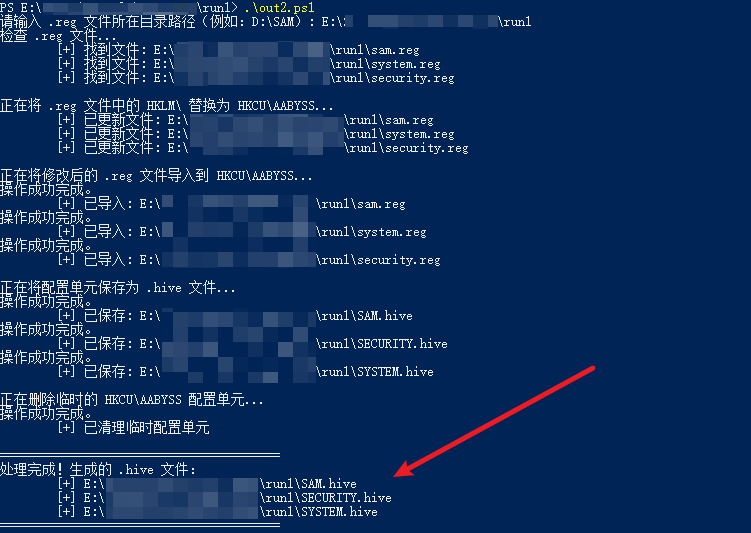
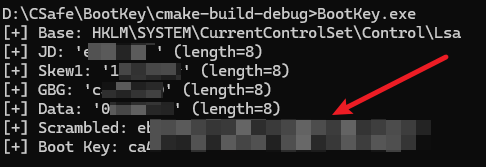
Architecture At its core the solution consists of three distinct components that work together in a pipeline. First, a one‑off command using the native Windows reg.exe export function pulls the SAM, SYSTEM, and Security hives from the target machine into separate .reg files. These text dumps are then transferred to an analysis workstation where the PowerShell script RegReduction.ps1 converts them back into binary hive files that match the format expected by downstream tools. Next, a compiled BootKey.exe binary reads the target’s boot key directly from memory; because it does not require elevated privileges, it can be executed even on heavily monitored endpoints. Finally, the extracted boot key is supplied to the Python script secretsdump.py, which reconstructs the hash payloads from the SAM, SYSTEM, and Security hives. This modular layout keeps each stage simple, allowing defenders to isolate failures and attackers to swap components as needed.
What you can do with it
The primary capability is the ability to bypass contemporary EDR solutions and retrieve credential material from a Windows system without resorting to traditional process injection or token manipulation techniques. By leveraging a legitimate system binary (reg.exe) and a compact C‑based key extractor, the approach avoids many of the signatures that trigger alerts. The workflow culminates in a single command that outputs the necessary hashes for further lateral movement or credential reuse. The README also highlights that the method has been tested across multiple Windows releases, including Windows 10, Windows 11, and Windows Server 2025, and that it works with both administrative and lower‑privilege contexts depending on the OS version.
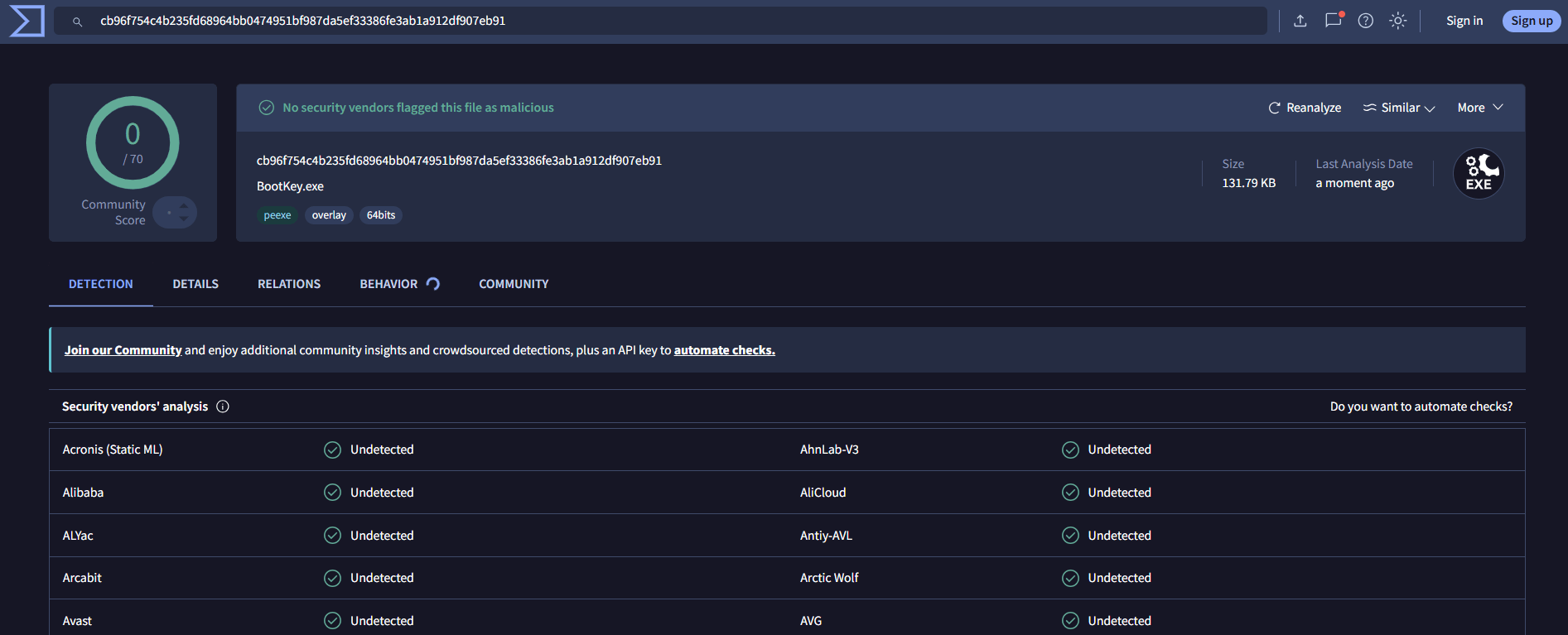
Constraints and gotchas Several practical limitations are worth noting. On newer Windows builds, the reg.exe export command requires SYSTEM‑level rights; a 1 KB output file is an early indicator that the export failed due to insufficient permissions. Older versions of Windows, such as certain Server 2022 releases, allow ordinary administrators to perform the export without elevation. The BootKey.exe component can be run without any special privileges and has shown low detection rates on VirusTotal as of the latest test date, but its effectiveness may vary against aggressive behavior‑monitoring products. Because the solution relies on native Windows tools, it does not introduce additional dependencies, yet it does require the presence of Python and the secretsdump.py script on the analysis host. Finally, the approach does not address post‑extraction cleanup or persistence, leaving those steps to the operator.
Getting started
To reproduce the workflow, the README provides a concise quickstart that points readers to the project’s RegReduction.ps1 script and the accompanying BootKey.exe binary. Following the documented steps—exporting the hives, converting them locally, extracting the boot key, and feeding the results into secretsdump.py—will yield the desired hash output. Detailed commands and environment checks are listed in the repository’s documentation, and consulting the source repository is recommended for the most up‑to‑date instructions.
The technique is best suited for red‑team engagements where stealth and minimal footprint are priorities, and where the attacker already has access to a compromised host with sufficient registry read permissions. For broader enterprise defense, the method offers a useful case study of how legitimate system utilities can be repurposed to evade detection, but it is not a turnkey solution for everyday credential harvesting. Alternatives such as direct LSASS memory dumps or token impersonation remain more versatile, albeit noisier, while commercial EDR bypass frameworks often provide richer feature sets at the cost of increased complexity. Ultimately, HashDump‑BypassEDR demonstrates a clever abuse of Windows’s own export mechanisms, filling a niche for attackers who value speed and simplicity over breadth of functionality.
The source is on GitHub.
Comments