A patched Firefox 100% Playwright-compatible that passes the hardest browser-fingerprint detectors in the wild.
Results
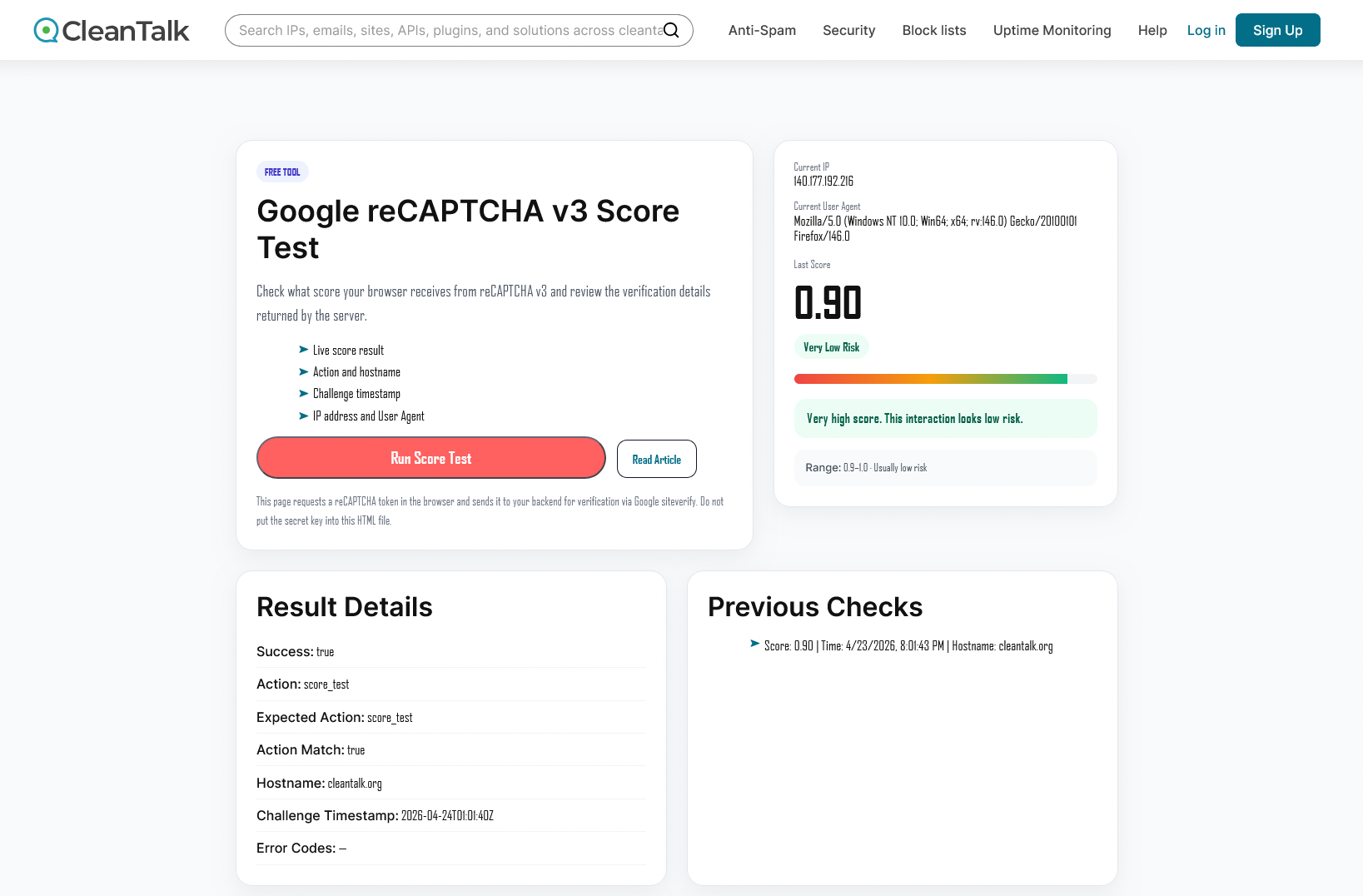
Google reCAPTCHA v3 - 0.90 / 1.0
Top-tier score. Google classifies the session as "very likely a human". Most anti-detect stacks plateau around 0.3-0.7.
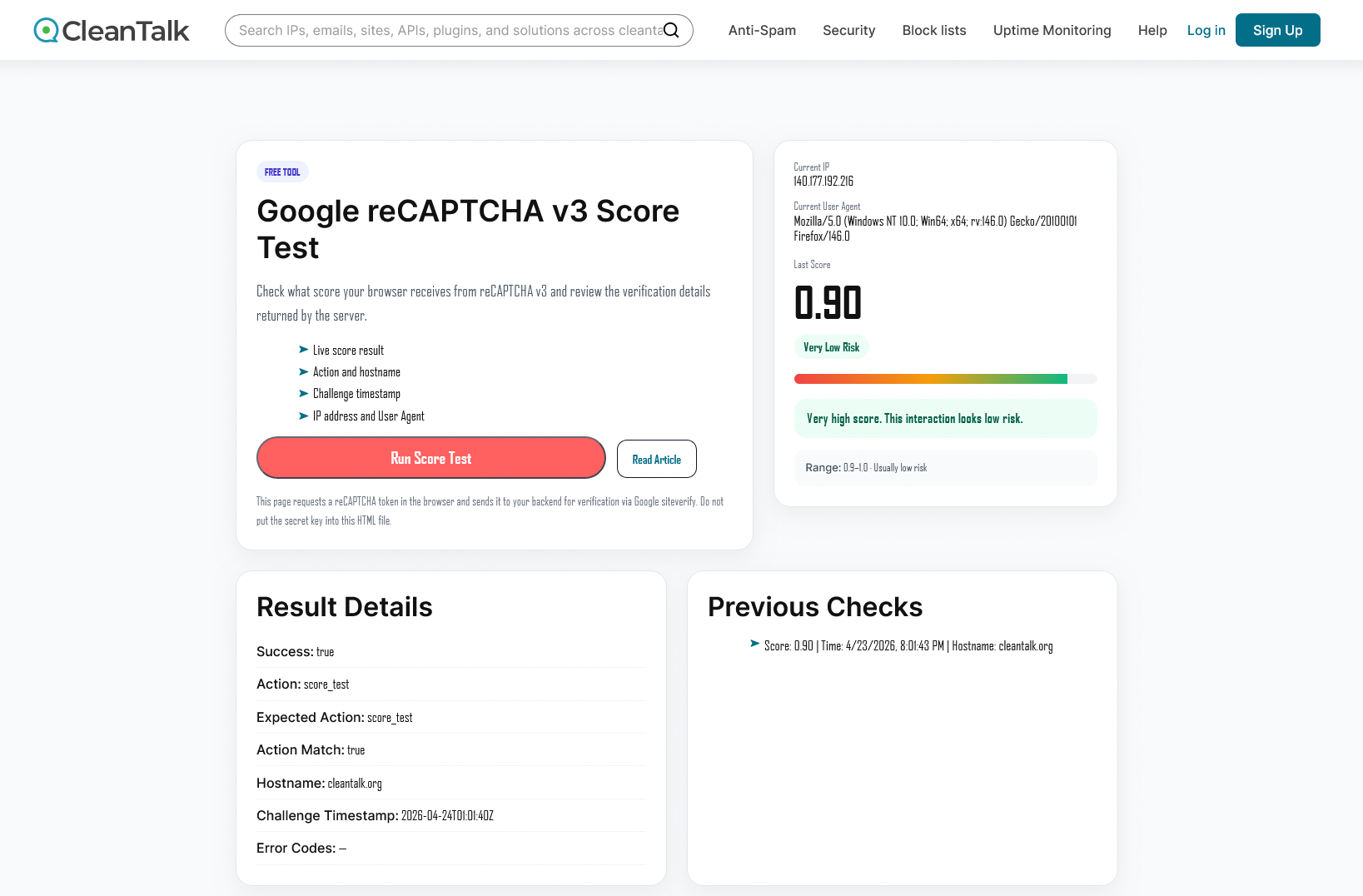
Fingerprint Pro - bot: not detected, VPN: false, tampering: false, dev tools: not detected
FingerprintJS Pro's full Smart Signals battery flips every flag to "Not detected". Browser correctly identified as Firefox 150 on Windows 10. Confidence score 0.9.
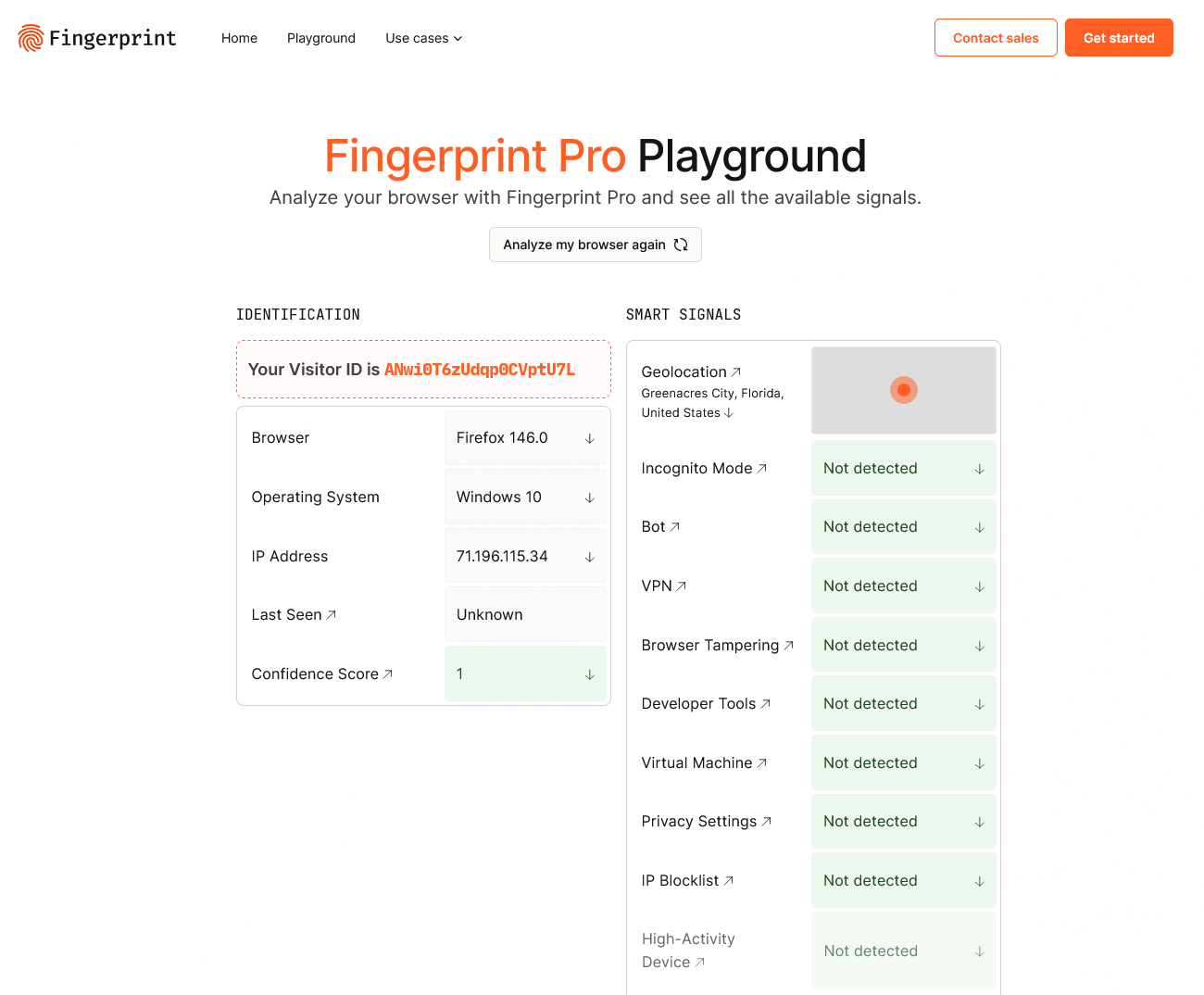
CreepJS - 0 lies, fingerprint is internally coherent
No contradictions between headless hints, spoofed values, and real rendering output. That "0 lies" is what kills most anti-detect browsers: one inconsistency (e.g. Chrome UA + Firefox WebGL) and the trust score collapses.
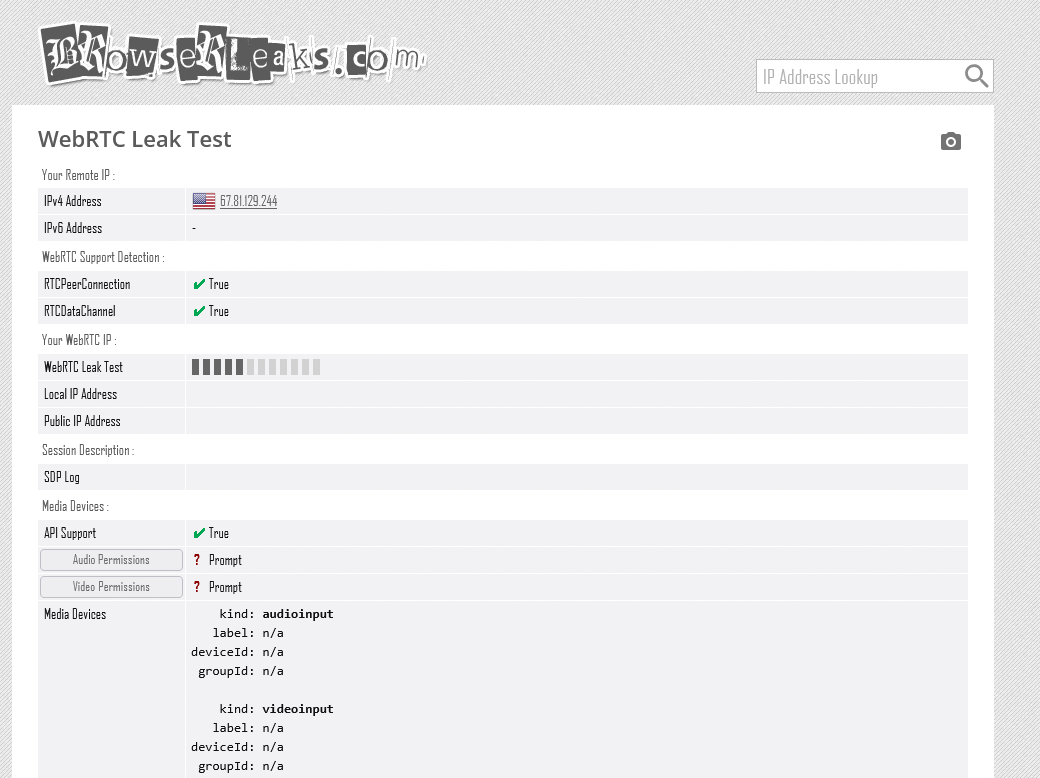
BrowserLeaks WebRTC - no public IP leak
WebRTC srflx address is the proxy egress IP; host candidates are private LAN. The real public IP never leaks via STUN, even on pages that configure their own ICE servers. Stock Firefox exposes an mDNS hostname (e.g. abc-1234.local) as a host ICE candidate, which is itself a stable per-session signal detectors fingerprint. invisible_playwright replaces host candidates with synthetic private-LAN IPs that match the spoofed network, removing the mDNS tell.
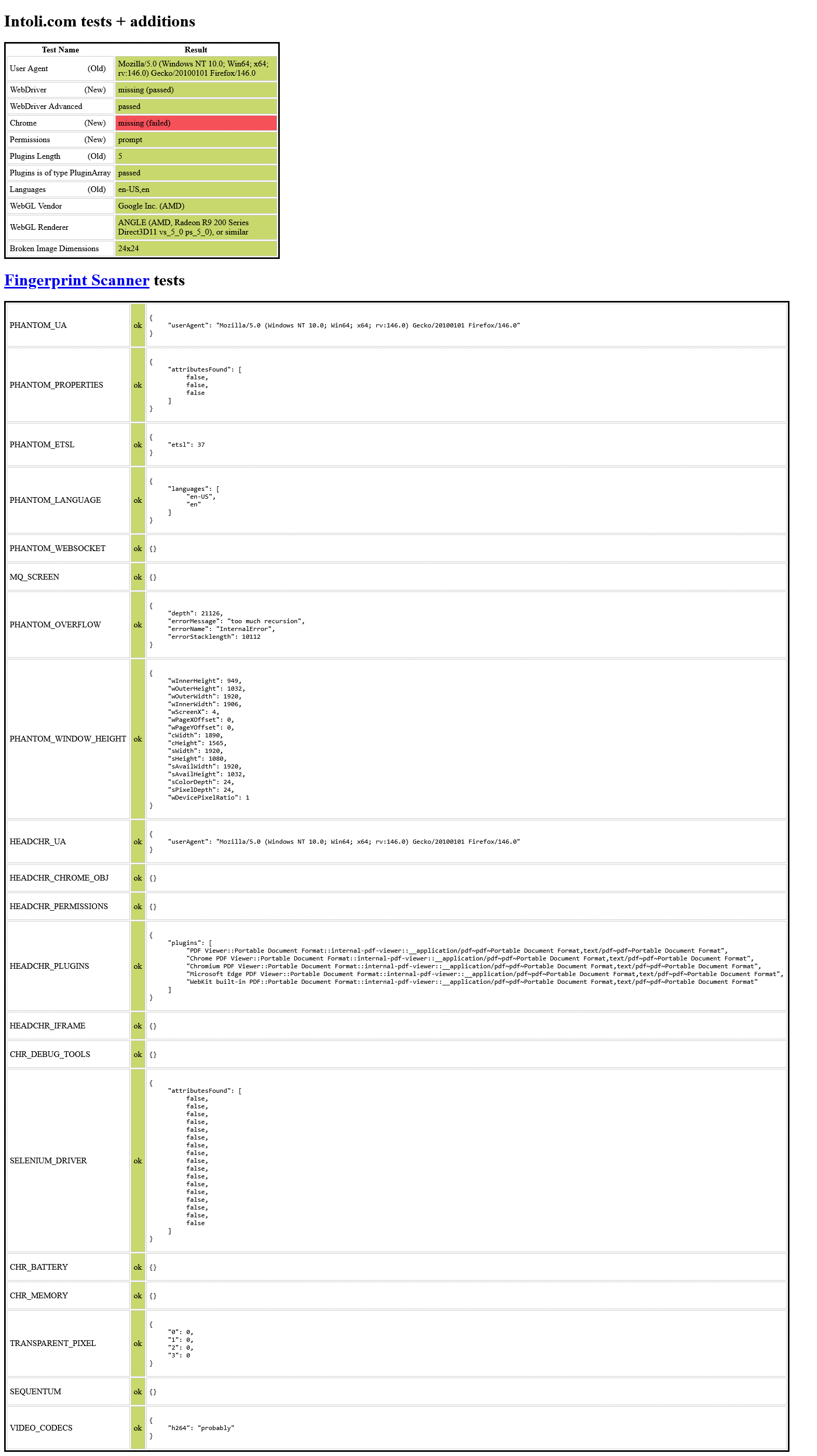
bot.sannysoft.com - all checks pass
Every row green: WebDriver not present, Chrome-only properties absent, plugin/mime/languages arrays coherent, permissions API correct, iframe/source window checks pass.
Why it's powerful
Most anti-detect browsers patch Chromium at the JavaScript level - they override navigator, WebGLRenderingContext.getParameter, canvas APIs, and so on via injected scripts. This has two fatal problems:
- JS patches are detectable. Anti-bots enumerate native function
.toString(), check descriptor configurability, compare property enumeration order, watch for prototype mutations. Every patch leaves a fingerprint of its own. CreepJS has an entire battery of "lies detectors" built around this. - Chromium itself is now suspect. Residential-proxy bot traffic is overwhelmingly Chromium-based, so detectors weight anything Chromium-shaped as risky by default. Chromium-based forks inherit Chrome's open-source layers (BoringSSL, Blink, V8, ANGLE) cleanly, but they still cannot fully match Chrome in practice: Chrome ships closed-source components on top (Widevine, proprietary codecs, Google Update / Safe Browsing endpoints) that flip detectable JS feature flags and network signals, and forks lag Chrome's release cadence by days to weeks, leaving telltale version-specific behaviours that detectors lock onto.
invisible_playwright patches Firefox at the C++ level. The spoofed values come back out through the normal Gecko paths - there is no JS shim, no override, no Object.defineProperty. From the page's point of view, the browser is just telling the truth. Anti-bot lie-detectors have nothing to latch onto.
invisible_playwright spoofs all the layers that matter, together, coherently — Navigator, screen, GPU/WebGL, Canvas, fonts, audio, WebRTC, timezone, DevTools detection, SOCKS5 auth, and the rest. See feder-cr/invisible-firefox for the full per-layer breakdown of which C++ files are patched and why.
Everything is driven by preferences - no hardcoded values in the binary. You change one pref, you change the spoofed value.
How it compares
Commercial anti-detect browsers (Multilogin Mimic, GoLogin Orbita, AdsPower, Dolphin Anty) ship patched Chromium and apply most spoofing at the JavaScript layer. A few (Kameleo, Multilogin Stealthfox) also offer Firefox-based profiles, but the spoofing pattern is the same: runtime overrides on top of an unmodified rendering engine. That's the ceiling - and it's a low one.
| invisible_playwright | Multilogin / GoLogin | AdsPower / Dolphin | Kameleo | |
|---|---|---|---|---|
| Engine | Firefox (open source) | Chromium fork | Chromium fork | Chromium |
| Patch depth | C++ source | JS overrides | JS overrides | JS overrides |
.toString() clean |
✅ Native Gecko path | ❌ Detectable shims | ��� Detectable shims | ❌ Detectable shims |
| Canvas / WebGL | ✅ C++ level | ⚠️ JS override | ⚠️ JS override | ⚠️ JS override |
| SOCKS5 auth | ✅ Patched | ⚠️ Varies | ⚠️ Varies | ❌ |
| Self-hosted | ✅ | ❌ SaaS | ❌ SaaS | ❌ Cloud |
| reCAPTCHA v3 score | 0.90 | ~0.3-0.6 | ~0.3-0.5 | ~0.3-0.5 |
| FP Pro - bot detected | ✅ Not detected | ❌ Detected | ❌ Detected | ❌ Detected |
| FP Pro - tampering | ✅ Not detected | ❌ Detected | ❌ Detected | ❌ Detected |
| FP Pro - VPN flag | ✅ false | ❌ true | ❌ true | ❌ true |
| CreepJS lies | ✅ 0 | ❌ multiple | ❌ multiple | ❌ multiple |
Competitor scores reflect our own testing on Windows 10 against the same five detection suites used above; results may vary with their evolving builds.
Install
pip install git+https://github.com/feder-cr/invisible_playwright.git
python -m invisible_playwright fetch      # one-time ~100 MB download, SHA256-verified
Supported platforms: Windows x86_64, Linux x86_64.
Usage
Random fingerprint per session
100% Playwright-compatible - sync and async, all methods, zero API changes. If you already use Playwright, switching is two lines:
- from playwright.sync_api import sync_playwright
- with sync_playwright() as p:
-     browser = p.firefox.launch()
+ from invisible_playwright import InvisiblePlaywright
+ with InvisiblePlaywright() as browser:
Every session gets a unique, coherent fingerprint drawn from real-world Firefox telemetry (GPU / audio / fonts / ~400 other fields) and Bezier-curve mouse motion baked into the browser itself.
Sync
from invisible_playwright import InvisiblePlaywright

with InvisiblePlaywright(proxy={"server": "socks5://...", "username": "u", "password": "p"}) as browser:
    page = browser.new_page()
    page.goto("https://example.com")
    page.click("#submit")   # mouse arcs to the button on a Bezier curve
Async
from invisible_playwright.async_api import InvisiblePlaywright

async with InvisiblePlaywright(proxy={"server": "socks5://...", "username": "u", "password": "p"}) as browser:
    page = await browser.new_page()
    await page.goto("https://example.com")
    await page.click("#submit")
The browser object is a playwright.sync_api.Browser / playwright.async_api.Browser - every Playwright method works as-is.
Random fingerprint per session
from invisible_playwright import InvisiblePlaywright

with InvisiblePlaywright() as browser:
    page = browser.new_page()
    page.goto("https://creepjs-api.web.app")
Every call samples a new coherent profile. Log the seed to reproduce interesting runs:
sf = InvisiblePlaywright()
with sf as browser:
    print("seed =", sf.seed)
    # ...
Reproducible fingerprint
with InvisiblePlaywright(seed=42) as browser:
    ...   # same GPU, same canvas hash, same audio context, every run
Proxies
proxy = {
    "server": "socks5://gate.example.com:1080",
    "username": "user",
    "password": "pass",
}
with InvisiblePlaywright(proxy=proxy) as browser:
    ...
Schemes supported: socks5, socks4, http, https. Auth works on all of them (SOCKS5 via patched nsProtocolProxyService.cpp, HTTP/HTTPS via Playwright). DNS is routed through the proxy by default, no local leak.
Pinning specific fingerprint fields
By default everything comes from seed. To force specific values while the rest stays seed-derived:
with InvisiblePlaywright(
    seed=42,
    pin={
        "gpu.renderer": "ANGLE (NVIDIA, NVIDIA GeForce RTX 4090 Direct3D11)",
        "gpu.vendor":   "Google Inc. (NVIDIA)",
        "screen.width":  2560,
        "screen.height": 1440,
        "hardware.concurrency": 16,
    },
) as browser:
    ...
Full list of pinnable keys, how pinning interacts with the Bayesian sampler, and common patterns are in docs/pinning.md.
CLI
invisible_playwright fetch          # download the binary if missing
invisible_playwright path           # print the absolute path to the cached binary
invisible_playwright version        # wrapper and binary versions
invisible_playwright clear-cache    # remove all cached binaries
Related projects
invisible_playwright takes a different angle than the major Firefox-hardening projects but stands on their shoulders:
- arkenfox/user.js - the canonical Firefox configuration for privacy/security hardening via prefs. Reading arkenfox is how you understand which
user.jsknobs matter; invisible_playwright goes further by patching the C++ source where prefs alone are insufficient (Canvas noise, WebGL parameter overrides, font whitelisting, WebRTC IP swap, DevTools detection bypass). - LibreWolf - a Firefox fork bundled with sensible privacy defaults. Same audience, different distribution model: LibreWolf ships a configured Firefox binary, invisible_playwright ships source patches + a wrapper for automation.
- Camoufox - the most well-known open-source anti-detect Firefox project. We share design goals on the fingerprint-spoofing side; the implementation approach differs (Camoufox patches a wider surface and ships its own fingerprint database, while invisible_playwright sticks closer to vanilla and drives spoofing from a Bayesian sampler).
Comments