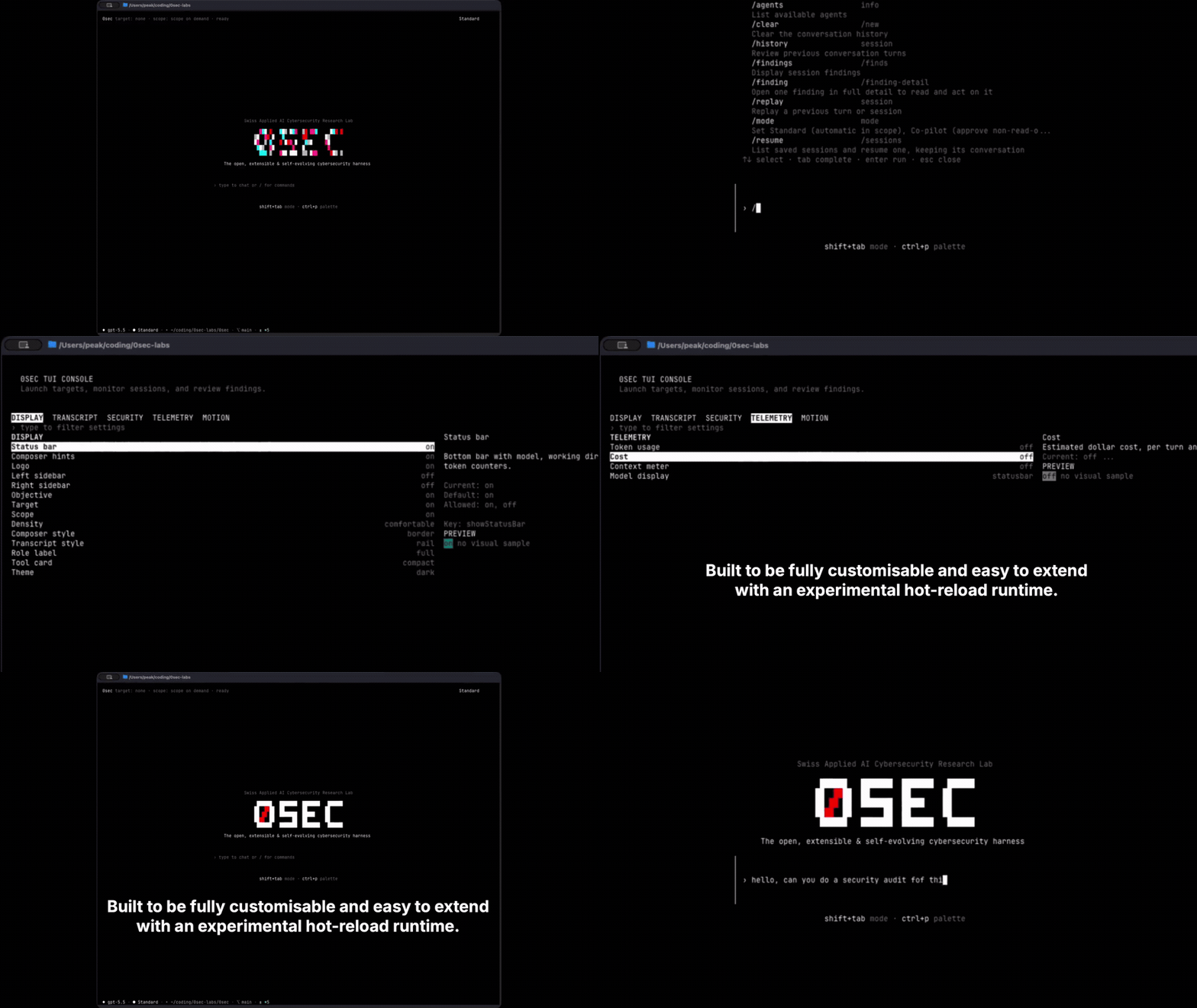
[RESEARCH PREVIEW] Your open & extensible AI cybersecurity team.
0sec finds vulnerabilities, creates working exploits, and writes the fix.
Multi-model, multi-agent, but most importantly: yours.
🇨🇭 Maintained by the Swiss Applied AI & Cybersecurity Research Lab · 0.security
Note: This project is currently in active development; features change daily! See Current limitations.
Install & Quick Start
curl -fsSL https://raw.githubusercontent.com/0sec-labs/0sec/main/install.sh | bash
export PATH="$HOME/.0sec/bin:$PATH"
0 --help
The verified binary is installed to ~/.0sec/bin with no Node/Bun dependency.
Add the export line to your shell profile to make 0 available in future shells.
What 0sec aims to cover
Most AI pentesting harnesses and tools stop at the web app layer to find and chain vulnerabilities. However research suggests that supply chain and other infrastructure level exploits are more common, and cheaper to exploit than ever before.
0sec's core philosophy is to be a single, extensible and transparent tool to tackle all the remaining layers as security changes from point-in-time tests towards continuous security.
| Layer | Finds |
|---|---|
| Web apps | SQLi, IDOR, XSS, SSRF, auth bypass |
| APIs | tenant isolation, BOLA, business-logic abuse |
| AI & LLMs | prompt injection, jailbreaks, MCP tool abuse |
| Source code | injection, auth, deserialization, memory safety |
| Dependencies | supply chain, malicious packages, CVE replay |
| Network / identity | AD, cloud, federation (read-only, offline) |
| Runtime / OS / kernel | container escape, privesc, 0-day hunt |
| Compiled binaries | no source → 0verse |
Automation and research adapters
| Task | Commands |
|---|---|
| Pentest web / AI-LLM / MCP | scan, eval, agent-assure |
| Review source / packages / kernel | review, file-review, audit |
| Recon an attack surface | recon, js-recon, npm-discovery, intel |
| Hunt a bug class / kernel variants | hunt, kernel, cve |
| Work with evidence | findings, history, resume, replay, verify, disclose |
| Generate & re-test a fix | fix |
| Identity / AD (read-only) | identity, adgraph, entragraph |
| Integrate | mcp-server, console, tui, dashboard |
Run 0 --help for the rest. Full docs: docs.0.security.
Primary workflow
Run 0 to open the primary OpenTUI chat. Type /run to open its engagement
control pane, then enter a URL, a local source path, a git URL, or an explicit
package target (npm:, pypi:, cargo:, oci:). The pane shows the resolved
engagement before it runs it; deep source engagements use the validated
finder-lens strategy. Specialized CLI commands remain available for automation
and research, but they are not separate primary TUI modes.
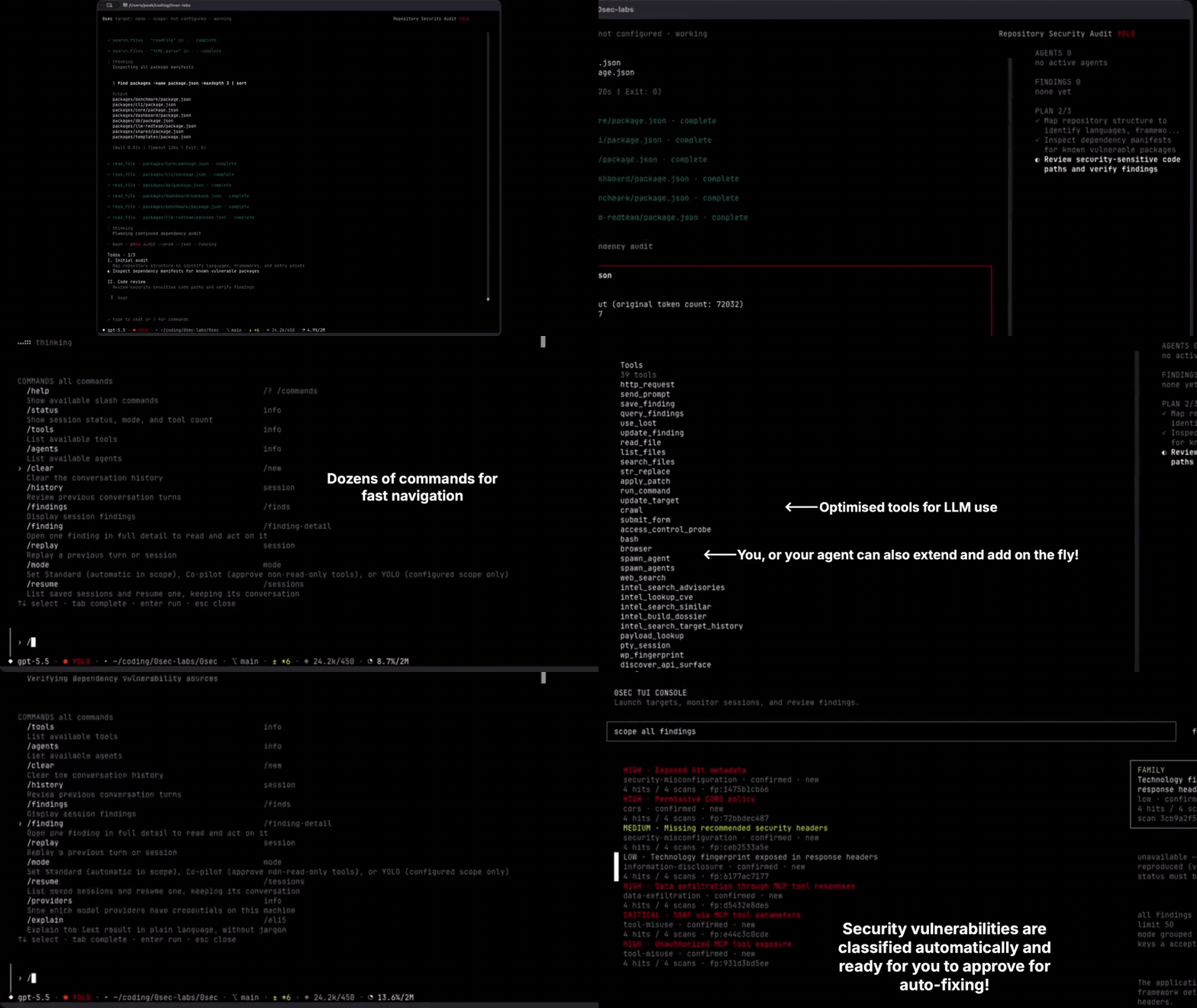
The interactive console — / opens the command palette.
How it works
It proves the bug before it reports it.
- Free-form agents, hard guardrails. Models decide what to probe; turn budgets, loop detection, and scope-on-every-call keep them in line.
- Reproduce before trust. A blind agent re-exploits each finding from the PoC alone. What it can't reproduce is dropped.
- Triage before verify. Class oracles and a second scanner cut noise before the expensive step.
- Bring your own model. Anthropic, OpenAI, Azure, OpenRouter, or local Ollama — you hold the key.
Every run keeps its own evidence under ~/.0sec/runs/<id>/, so you can resume, replay, or disclose it later.
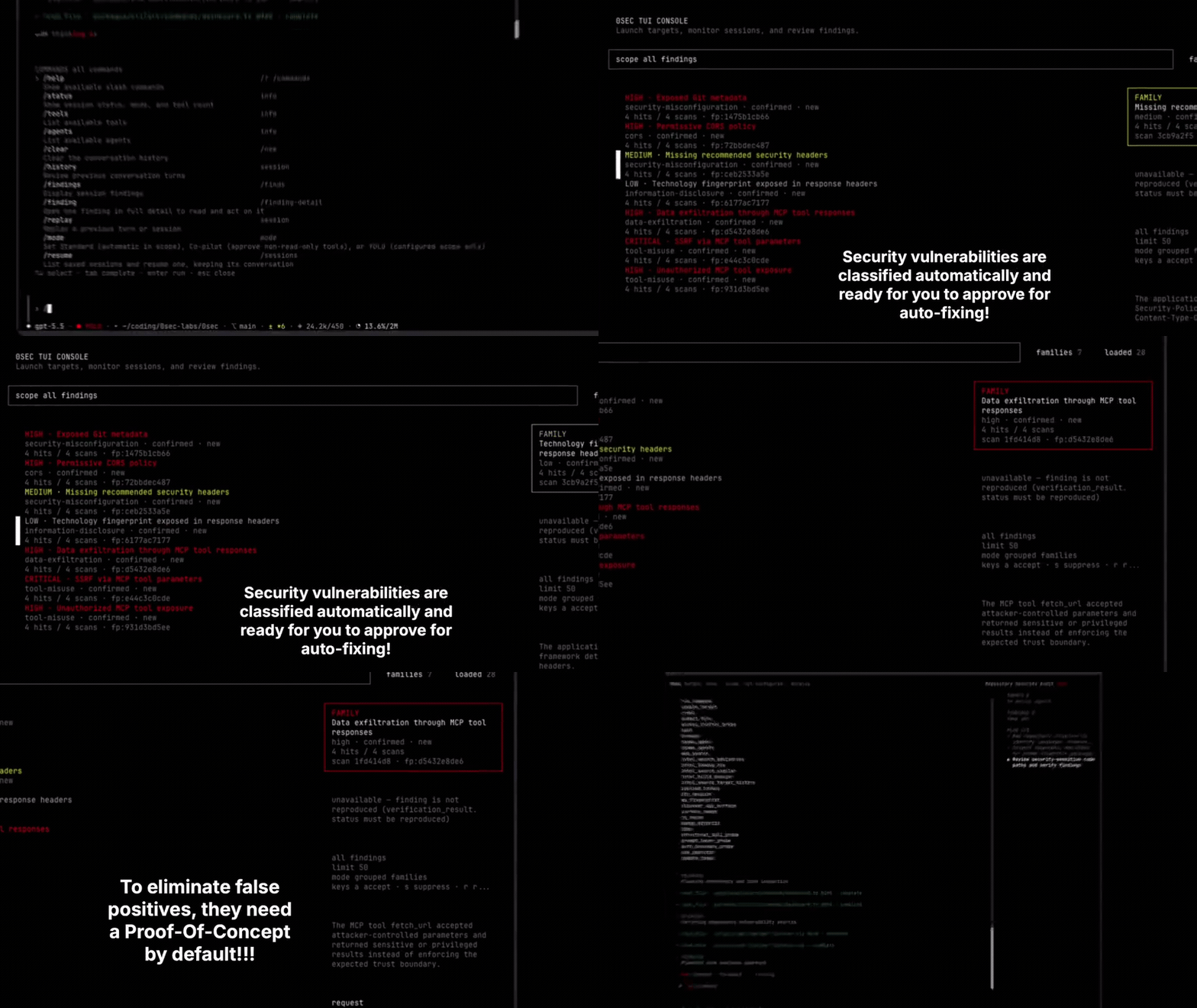
Blind verification — every finding is re-exploited before it ships.
Track record
0sec has landed real, maintainer-reviewed fixes in the mainline Linux kernel and other open source. The verified list lives at 0.security. Benchmarks are secondary evidence — caveats in the benchmark docs.
Supported by
With special thanks to the startup and research programs supporting our work:


Honest limitations
- Kernel/IOKit findings stay hypotheses until a real oracle reproduces them (the
linux-kernelprofile is static). - Verification depth varies:
verificationSpeccovers file/diff predicates. The replay runner isolates PoCs in fresh, unprivileged, read-only Docker containers (no network by default; scoped HTTP opts into a bridge/custom network viaverify --docker-network+--scope) and offline QEMU initramfs guests (--qemu-kernel/--qemu-busybox, or0SEC_REPLAY_QEMU_*) — but a finding still has to ship executablepocStepsfor any of it to run; without them the finding isskipped. - The false-positive-moat layers are off by default and slice-dependent.
- Benchmarks are single-model/config/trial; the 10/10 AI-suite is self-authored, not independent.
fixis narrow: source-only, single-file, ≤3 attempts.- By design, never: network sweeps, credential spraying, persistence/C2, or stealth.
Build from source
git clone https://github.com/0sec-labs/0sec.git && cd 0sec
corepack enable && pnpm install --frozen-lockfile && pnpm build && node packages/cli/dist/index.js --help
Comments