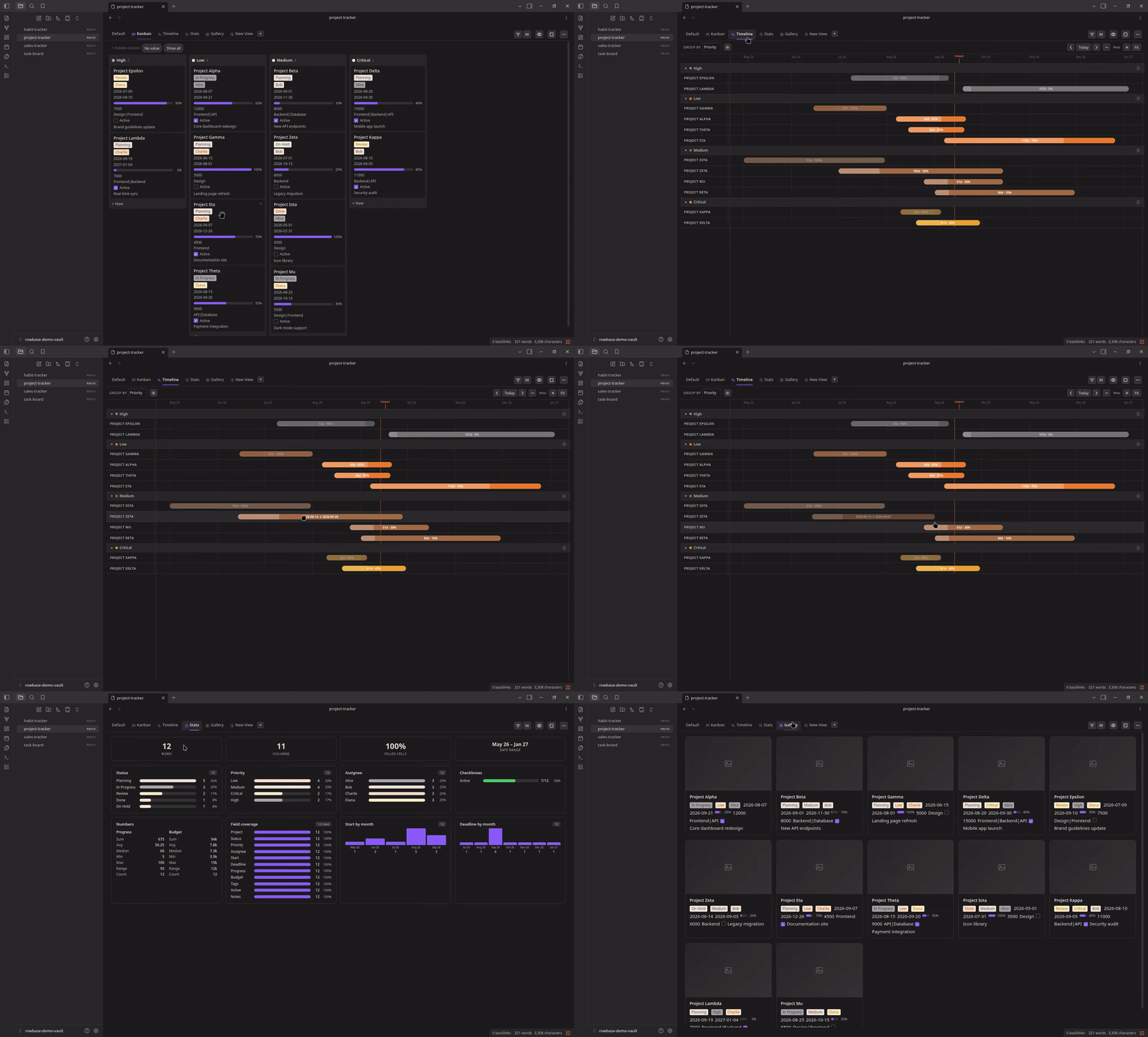
Rowbase is an Obsidian plugin that brings Notion-style databases to your vault. Each database is a single .rbase file — a human-readable CSV with JSON column metadata — that opens in a rich, interactive view with multiple layouts, formulas, relations, and more.
Demo
Features
Views
- Table — Full-featured spreadsheet with inline editing, sorting, filtering, column resizing, and row reordering
- Kanban — Drag-and-drop board grouped by a select column
- List — Compact grouped rows with collapsible sections
- Gallery — Card grid with cover images and clickable detail modals
- Chart — Bar, Line, Pie, and Area charts with aggregation and color-by options
- Stats — Summary cards, numeric stats, select color distribution, and date distribution
- Timeline — Gantt-style timeline with status colors, grid lines, today marker, zoom, and tooltips
- Dashboard — Habit tracking with streaks, completion rings, and activity calendar heatmap
Column Types
- Text, Number, Date, Checkbox, Select, Multi-select, Title, Note, Relation, Rollup, Formula
Data & Computation
- Formulas — Safe expression evaluator with cell references and cross-relation aggregation (SUM, AVG, COUNT, MIN, MAX) plus IF and DAYS (date difference)
- Rollups — Aggregate related rows (sum, count, avg, min, max) across relation columns
- Relations — Link rows across databases; preloaded resolver with cache for fast cross-file lookups
- Sorting — Multi-column sort with ascending/descending toggle
- Filtering — Text (contains, starts with, is empty), Number (>, <, between), Date (before, after, between), Select (is, is not), Checkbox filters
- Grouping — Group rows by any column with collapsible sections
UI/UX
- Inline editing — Click any cell to edit; text, number, date, and select types all editable in place
- Undo/Redo — Cmd+Z / Cmd+Shift+Z with 100-step history stack
- Column management — Add, rename, resize (double-click to auto-fit), reorder, delete columns via context menu
- Title linking — Open or create notes from title cells; configure note folder per column
- Folder linking — Create folders directly from title cells; configure default folder per column
- Multi-select keyboard nav — Arrow keys, Enter to select, Escape to close
- Empty states — Friendly placeholder with icons when databases or views are empty
- Mobile responsive — Optimized for tablets and phones with touch-friendly targets
- Import/Export — Import CSV files into databases; export to CSV or JSON
- Plugin settings — Default folder, template name, a validated template-columns editor, note/folder linking defaults, and show-row-numbers
Screenshots
Table View
Kanban Board
Chart View
Timeline View
Stats View
Dashboard View
Inline Editing
Installation
From the Community plugins store (recommended)
- Open Settings → Community plugins in Obsidian.
- If needed, turn off Restricted mode, then search for Rowbase — or open obsidian.md/plugins?id=rowbase and press Install.
- Enable the plugin in the same screen.
Want the latest beta before it hits the store? Install it via BRAT with the repo Soulaymane01/Rowbase.
Rowbase is 100% offline — no account, no telemetry; your data stays in your vault.
Manual installation
- Download
main.js,manifest.json, andstyles.cssfrom the latest release - Create a folder
rowbasein your vault's.obsidian/plugins/directory - Copy the three files into that folder
- Enable Rowbase in Settings → Community Plugins
Usage
- Use the command palette (
Ctrl/Cmd + P) and run Create new database to create a.rbasefile - Add columns using the + button in the header row
- Add rows using the + New button at the bottom
- Switch views using the view selector in the toolbar
- Sort, filter, and group rows using the toolbar controls
The .rbase file is a standard CSV file with column metadata encoded in the header row. It remains human-readable and can be opened with any text editor or spreadsheet application.
The complete file-format reference for AI agents lives in SKILL.md — it documents everything needed to create and edit .rbase files through direct file manipulation.
Development
npm ci
npm run dev    # watch mode
npm run build  # production build
To test locally, create a symlink from your vault's plugin directory to the project root:
ln -s /path/to/rowbase /path/to/vault/.obsidian/plugins/rowbase
Offline baseline
Rowbase's runtime is fully offline. It makes no HTTP requests, WebSocket connections, telemetry, CDN asset fetches, or remote service calls; everything reads from and writes to the local Obsidian vault. Its runtime source and the production bundle are audited against that policy by:
npm run build            # produces main.js
npm run test:offline     # scans src/ and main.js for network/dynamic-code behavior
Comments