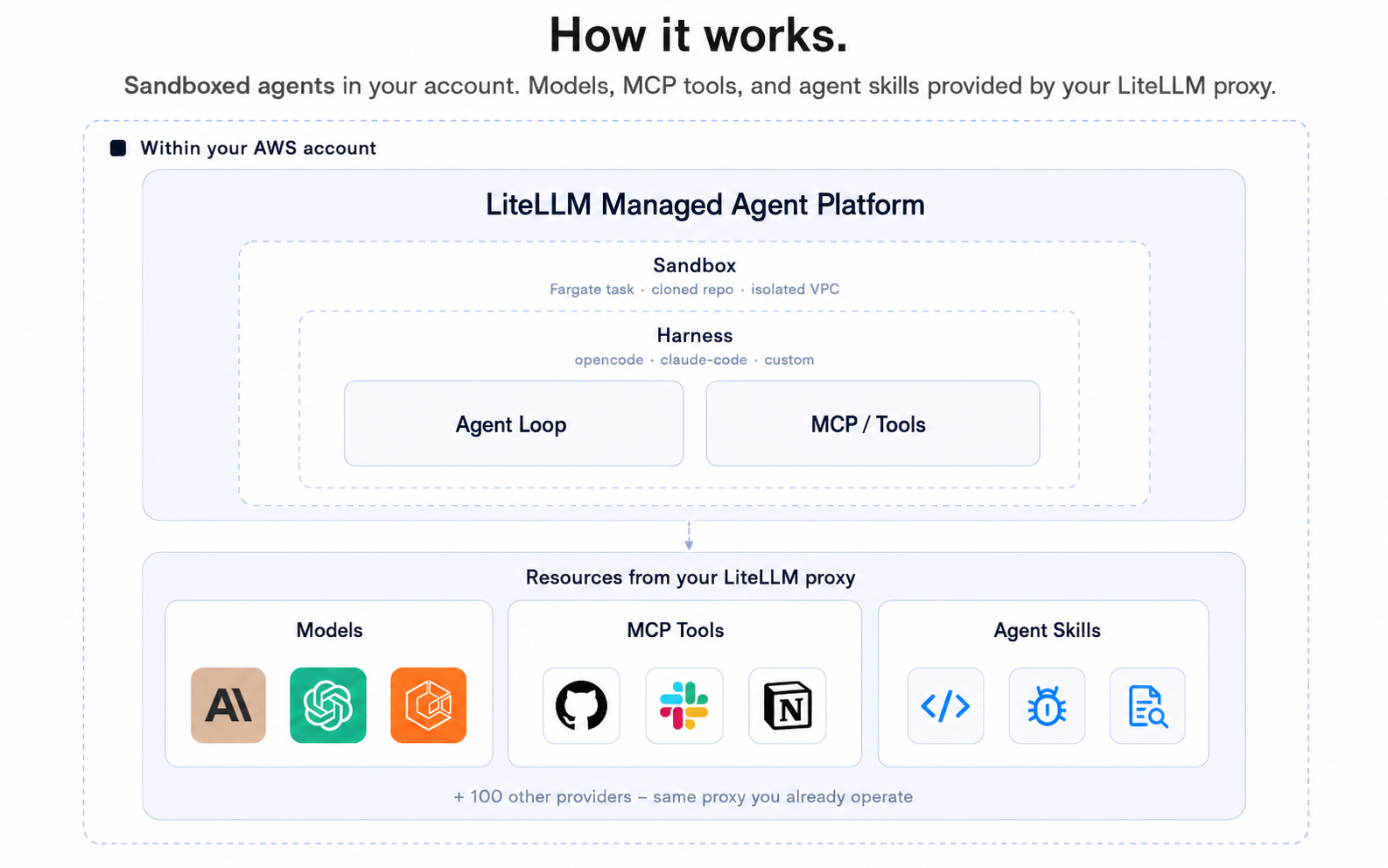
Agent infrastructure platforms have grown more sophisticated as the AI development landscape evolves. Options range from commercial solutions to open-source alternatives, each offering different approaches to deploying and managing multiple AI agents in production environments. Some platforms focus on specific types of agents, while others aim to be more general-purpose infrastructure.
What litellm-agent-platform does differently
The litellm-agent-platform distinguishes itself by providing a simple, self-hosted solution specifically designed for running multiple agents in production environments. This TypeScript-based platform offers a streamlined approach compared to more complex alternatives. Its focus remains on the core functionality needed for agent deployment without unnecessary complexity.
The platform's self-hosted nature gives users full control over their infrastructure, avoiding vendor lock-in and potential privacy concerns associated with cloud-based solutions. This approach is particularly valuable for organizations handling sensitive data or requiring specific compliance standards. The platform's TypeScript implementation suggests it benefits from strong type safety, which can reduce runtime errors and improve code maintainability in larger deployments.
Additionally, the project's simplicity likely translates to easier deployment and maintenance compared to more feature-rich but cumbersome alternatives. By focusing on essential functionality, the platform reduces the learning curve for teams wanting to get agents running quickly without managing excessive configuration.
Quick start
Getting started with litellm-agent-platform involves a straightforward setup process. First, ensure you have Node.js installed, as the project is written in TypeScript. Then, clone the repository and install the dependencies:
git clone https://github.com/BerriAI/litellm-agent-platform
cd litellm-agent-platform
npm install
To run the platform, execute the following command:
npm start
The platform should now be running locally, ready to be configured for your specific agent deployment needs. For production deployment, additional configuration for environment variables and process management would be required.
Trade-offs
The litellm-agent-platform offers several advantages for teams looking to deploy multiple agents. Its self-hosted approach provides maximum control over data and infrastructure. The TypeScript implementation delivers strong type checking and potentially better developer experience compared to JavaScript alternatives. The platform's simplicity makes it easier to understand and customize for specific needs.
However, there are trade-offs to consider. With only 46 GitHub stars, the project appears to have a smaller community compared to more established alternatives. This could mean fewer community resources, less documentation, and potentially slower issue resolution. The platform's simplicity might also limit advanced features that more complex solutions offer, such as built-in monitoring, scaling capabilities, or integration with specific AI model providers.
Additionally, as a newer project, it may have fewer production deployments and less battle-testing compared to more mature alternatives. Organizations with strict reliability requirements should evaluate whether the platform meets their needs before committing to production use.
For teams prioritizing simplicity, self-hosting, and control over their agent infrastructure, the litellm-agent-platform offers a focused solution. It's particularly well-suited for smaller teams or specific use cases where the complexity of larger platforms isn't justified. The TypeScript implementation also makes it accessible to developers comfortable with modern JavaScript development practices. The source is on GitHub.
Comments