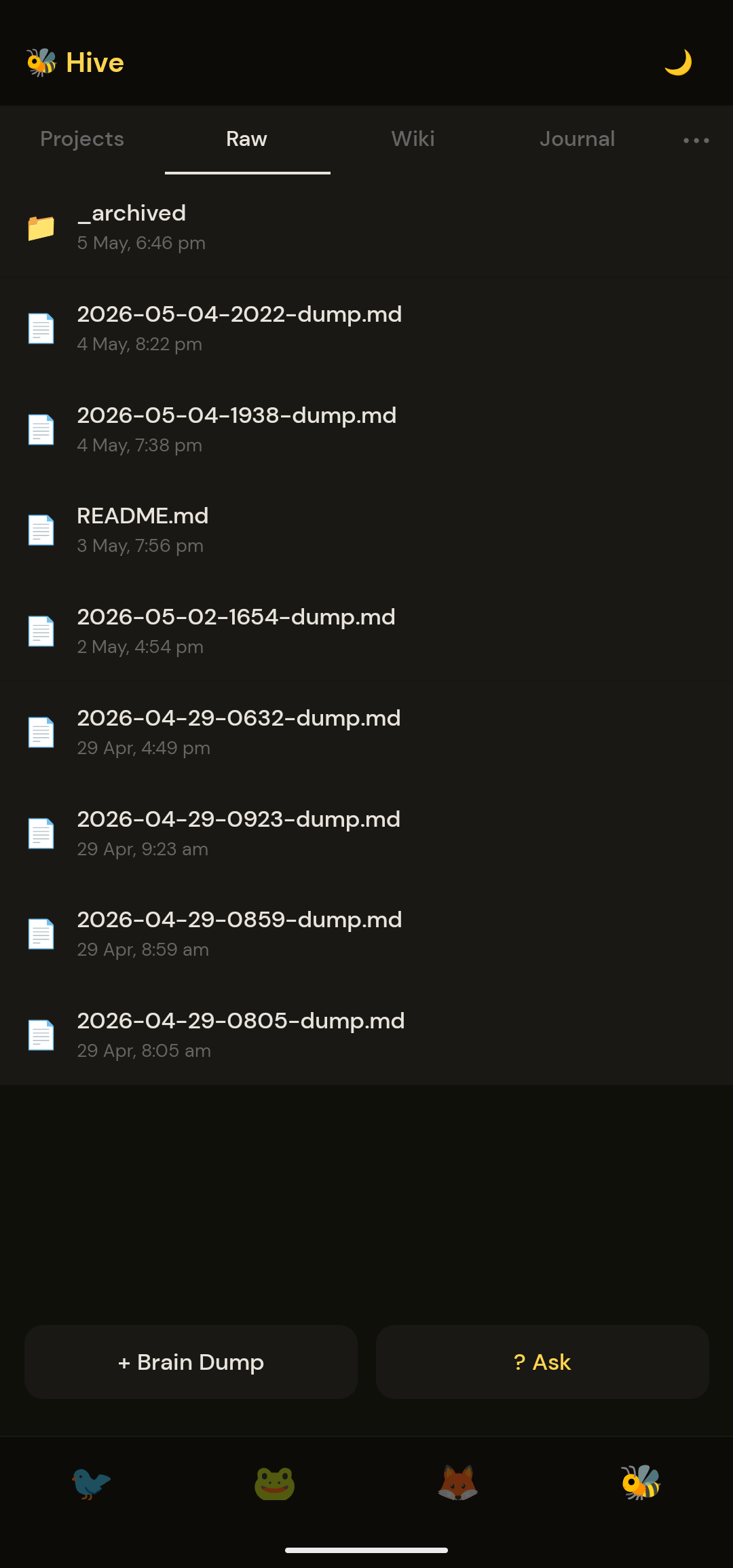
Self-hosted AI assistants have become a popular way to get structured help without handing your data to a third-party API. Companions takes a more focused approach: it provides four purpose-built AI helpers, each designed for a specific area — organisation, creativity, and reflection. Rather than a single general-purpose chatbot, the project splits responsibilities so each helper has a clearer role. For anyone who wants a lightweight, self-hosted AI toolkit without the overhead of a full platform, Companions is worth a look.
The project lives at sanieldoe/companions on GitHub, is written in TypeScript, and clocks in at around 43 stars. It's small, early-stage, and intentionally scoped — four helpers, not forty.
What you get out of the box
The core idea is simple: instead of one monolithic AI assistant that tries to do everything, Companions gives you four distinct helpers, each tuned toward a different mode of work.
- Organisation helpers that can assist with task management, planning, and keeping things structured.
- Creativity helpers aimed at brainstorming, writing, and ideation.
- Reflection helpers designed for journaling, reviewing your day, or thinking through decisions.
- Self-hosted deployment, meaning all processing stays on your own machine or server — no data leaves your infrastructure.
Because the helpers are purpose-built rather than general-purpose, they tend to produce more focused output. You're not prompting a blank model every time; each one starts from a defined context.
Getting it running
Companions is a TypeScript project, so you'll need Node.js installed. The typical path to get it running locally looks like this:
git clone https://github.com/sanieldoe/companions.git
cd companions
npm install
npm run dev
If you prefer containerised deployment, a Docker setup can usually be built from the project's Dockerfile or pulled from a published image if one exists. Check the repository for the most up-to-date instructions — at 43 stars, this is still a small project where the README is the best source of truth for current install steps.
You will need an API key for a model provider (OpenAI, Anthropic, or similar) since the helpers run on top of an LLM backend. The project itself handles the interface and routing; the model does the heavy lifting.
Who this is for
Companions fits a specific niche: individuals or small teams who want structured AI assistance without a SaaS subscription. It is not a Slack bot, not a customer support tool, and not an enterprise knowledge base.
It works best for someone who:
- Wants an AI that helps them stay organised — think daily planning, to-do management, or project tracking.
- Needs a creative sparring partner for writing, brainstorming, or exploring ideas.
- Values reflection as a habit and wants a low-friction way to journal or review progress.
- Prefers self-hosting and data privacy over cloud-only services.
If you are looking for a team-wide chatbot with user management and permissions, this is not the right tool. It's a personal productivity layer, and it works best when treated as one.
How it compares
The self-hosted AI assistant space has a few well-known options. Open WebUI (formerly Ollama WebUI) is a popular choice that wraps local or remote LLMs in a full-featured chat interface with multi-user support, RAG, and plugin extensibility. It is significantly more complex and feature-rich than Companions. LibreChat offers a similar multi-model, multi-user experience with a focus on supporting various API backends.
Where Companions differs is in its opinionated structure. Open WebUI and LibreChat give you a blank canvas — a chat window connected to a model. Companions carves that canvas into four specific zones, each with a defined purpose. That constraint is both its strength and its limitation: you get focus, but you lose the flexibility of an open-ended conversation.
Coplane, another lightweight option, is more of a CLI-based copilot for coding tasks. Companions is broader in scope — organisation, creativity, and reflection — but less specialised for any single domain.
Bottom line
Companions is a small, focused project that does a few things well. It gives you four AI helpers, each with a defined role, all running on your own hardware. It is not trying to be everything. The trade-off is clear: you get less flexibility than a general-purpose chatbot, but more structure for the specific tasks it supports. If you value simplicity, self-hosting, and a bit of intentional constraint in your AI tooling, this one fits neatly into that space. For anyone evaluating lightweight self-hosted assistants, the source is on GitHub.
Comments