
Independent commerce, connected on your terms.
Most online marketplaces bundle the storefront, discovery, checkout, data, and customer relationship inside one operator. Mobazha separates them. A seller can own the store and its commercial history while choosing which markets, services, and interfaces to connect.
The open-source Mobazha Node can publish products, receive and fulfill orders, verify supported payments, communicate with buyers, and preserve transaction history on a backend chosen by the operator. Other stores, marketplaces, apps, and Agents can connect through shared interfaces while each seller's backend remains authoritative for its own business state.
Try Mobazha · Explore the product · Run your own store · Read the whitepaper · Documentation
Current status:
v0.3.0-rc.1is the public release target. Use testnet while evaluating the current source; stable signed binaries have not yet been published.
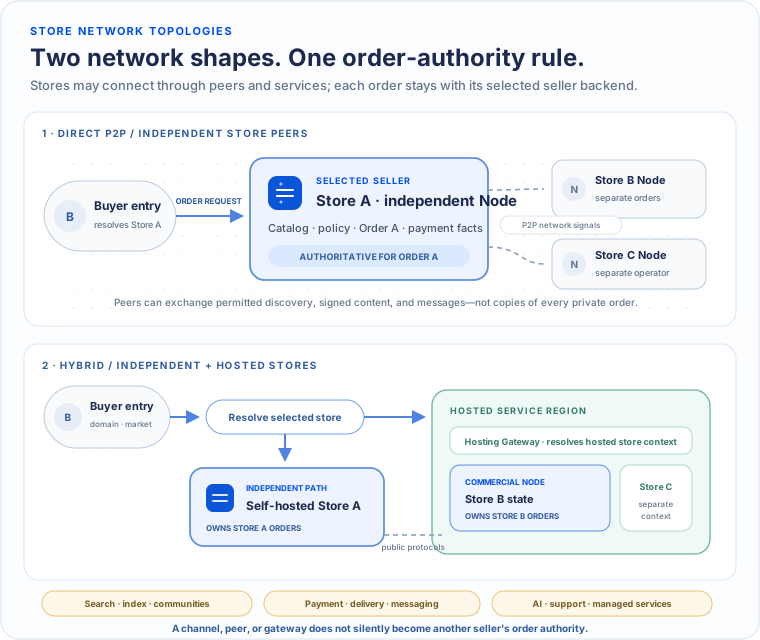
Stores can operate independently, use selected hosted services, or participate in a hybrid network without moving every order into one central database.
Why Mobazha
- Own the commercial relationship. Keep control of your store identity, catalog, policies, orders, customer interactions, and operational data.
- Use one commerce core across many channels. Present the same store through its own storefront, shared markets, direct links, embedded experiences, or Agent-assisted workflows.
- Choose what to operate yourself. Run the complete open-source Node, use a compatible hosted service, or combine your own backend with selected external services.
- Make important actions accountable. Orders, payment observations, fulfillment, recovery, and disputes are recorded by the backend that owns the transaction—not inferred from a page or notification.
One product, two core repositories
This repository contains Mobazha Node, the commerce engine and source of truth for store and transaction state. It provides the data, policies, APIs, messaging, payment verification, and operator controls needed to run a store.
Mobazha Unified is the shared buyer and seller experience. It turns the capabilities of a connected Node or hosted backend into storefront, checkout, order, marketplace, and administration journeys.
Together they support three operating paths:
- Hosted: start quickly while a service operator runs the backend under published terms.
- Self-hosted: run the Node on infrastructure you control and own its security, backup, and availability.
- Hybrid: keep the store backend independent while opting into selected discovery, payment, delivery, messaging, AI, or other services.
Try Mobazha
The fastest way to see the buyer and seller experience is app.mobazha.org.
To evaluate an independent Node from source:
git clone https://github.com/mobazha/mobazha.git
cd mobazha
go build -tags goolm -o mobazha .
./mobazha init --testnet
./mobazha start --testnet --open
The embedded Web UI and API listen on http://127.0.0.1:5102 by default. The current Community
release enables BTC, BCH, and LTC by default, subject to store configuration and runtime readiness.
See the release scope before relying on any specific
capability.
Comments