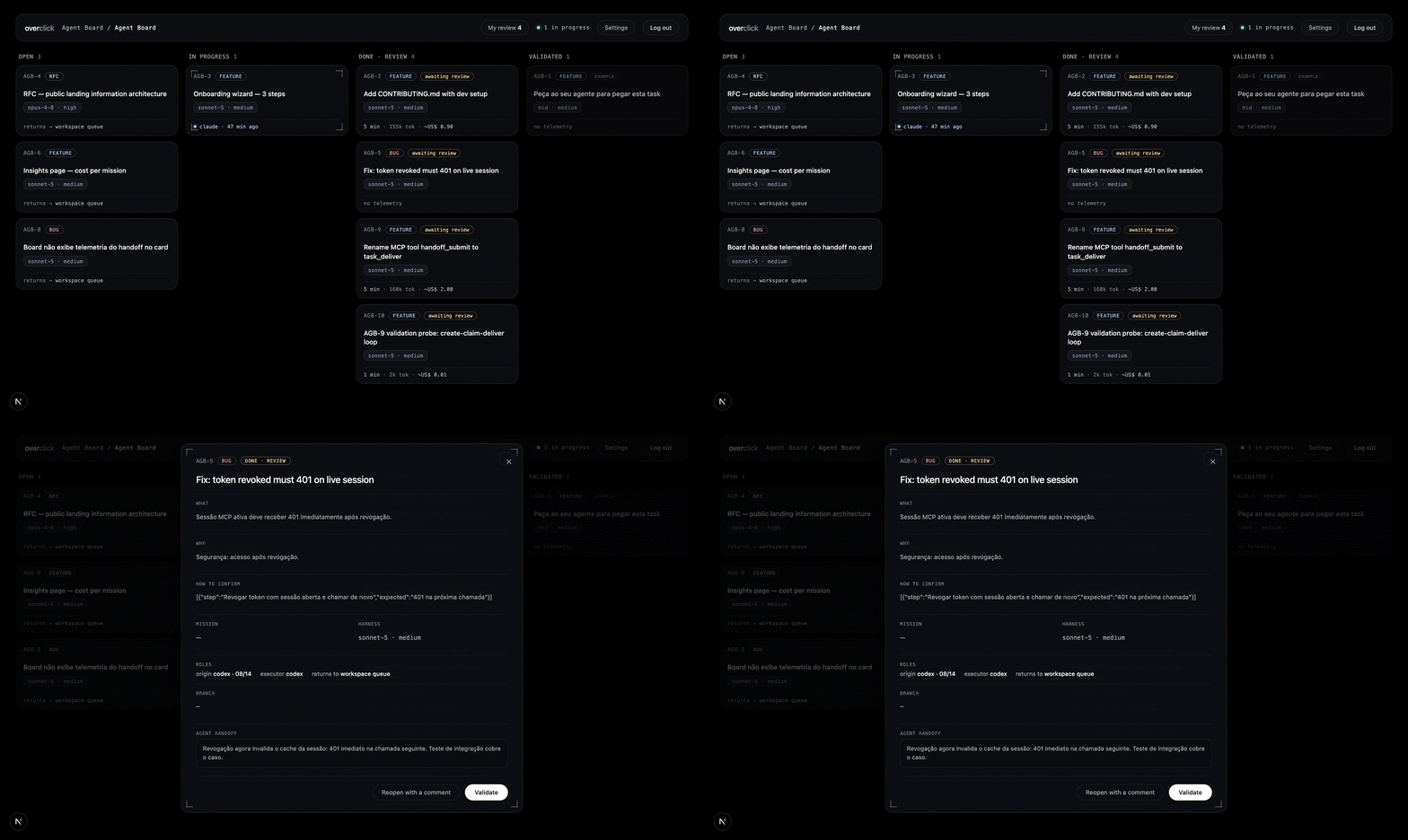
The open source task board where AI agents do the work.
OverClick is a self-hosted task board for hybrid human + AI-agent teams. Humans decide and review; agents execute. The board is just an interface, a database, and an MCP server. Any MCP-capable coding agent (Claude Code, Codex, Gemini CLI, Overclock, ...) connects to it, claims cards, does the work on its own machine, and reports back with evidence and real telemetry: tokens per model, and time.
Your board. Your server. Your data. Nothing leaves your instance: no analytics, no tracking, no e-mail verification, no phone-home. Ever.
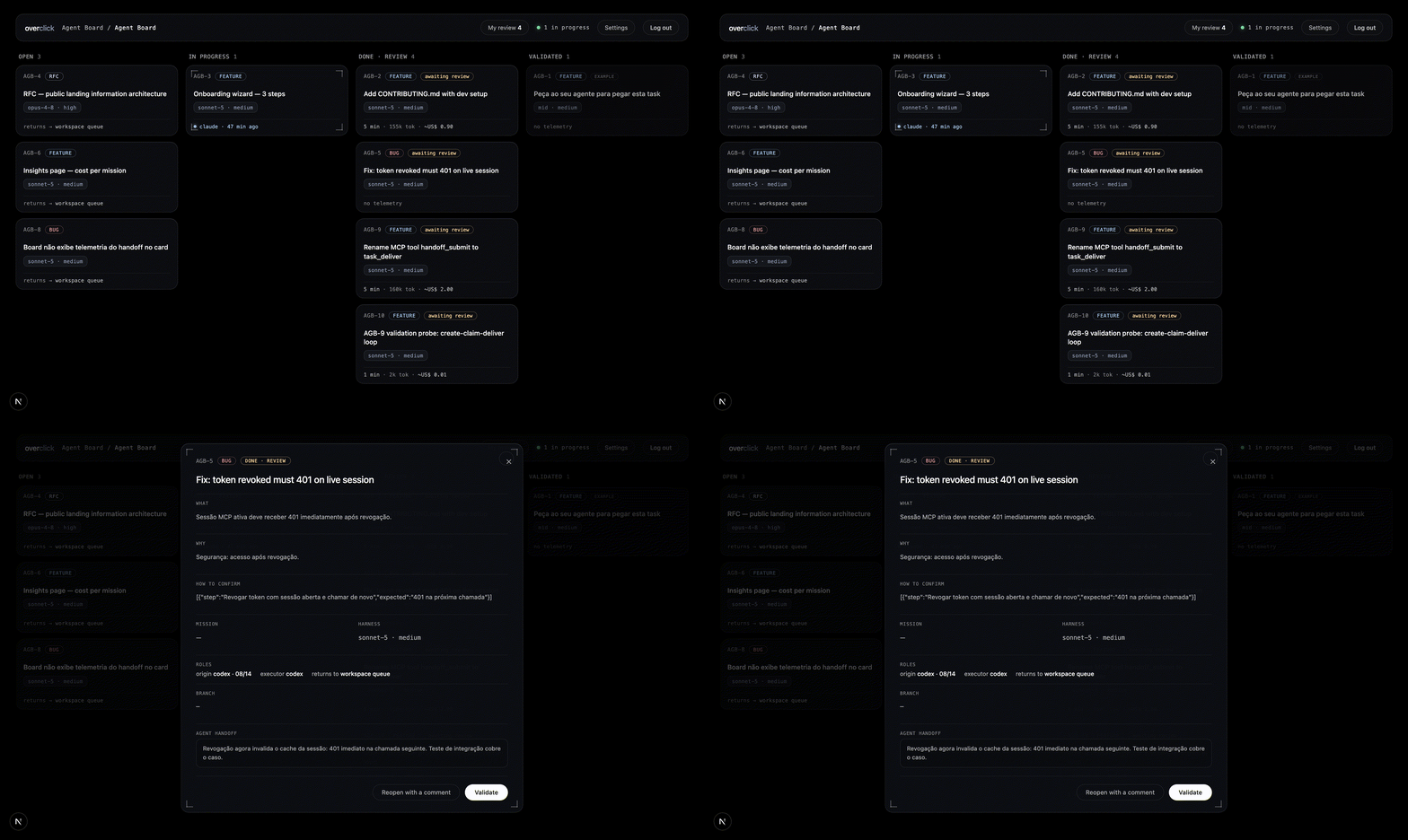
The loop
- You create a card. A contract, not a ticket: What should happen, Why, and How to confirm it (a plain-language test script).
- Your agent picks it up. "Grab the next task from the board." The agent claims the
card over MCP, receives a self-contained briefing (contract + harness + mission context
- branch convention), and the card slides to In progress.
- The agent delivers. A handoff with summary, evidence, branch/PR links, and real telemetry: tokens per model and duration. The briefing tells the agent exactly how to read those numbers off its own session transcript, so they are measured, not guessed.
- You validate. Review with the script you wrote in step 1. Only a human stamps Validated. Reopen with a comment and the agent sees it on the next claim.
Every card shows what it took: 34 min · 1.2M tokens · sonnet-5 to opus-5. Tokens and
time, because those are facts on every plan. Money is an optional layer, off by default.
Quickstart
git clone https://github.com/ustoppble/overclick && cd overclick
export AUTH_SECRET="$(openssl rand -base64 32)"
docker compose up --build
The signing key is mandatory and must be unique to each installation. Compose
stops with an explanatory error when AUTH_SECRET is missing; keep the generated
value in your deployment's protected environment so restarts use the same key.
Open http://localhost:3000, create the local admin account (e-mail + password, stored in
your own Postgres, used only for login), and follow the 3-step onboarding: project,
executors, connect your agent. Full walkthrough: docs/getting-started.md.
Connect an agent
claude mcp add --transport http overclick http://<your-host>/mcp \
  --header "Authorization: Bearer <your-token>"
Then, in your terminal: "grab the next task from the board." Watch the example card move.
Install the plugin (Claude Code)
The MCP server above is enough to claim and deliver cards. The plugin adds the rest of
the workflow — the canonical OVERCLICK.md, the /overclick:* commands, and the
lifecycle hooks — from this repository's own marketplace:
claude plugin marketplace add ustoppble/overclick
claude plugin install overclick@overclick
Verify it materialized rather than trusting the success message — claude plugin list
must report the version and claude plugin details overclick must list the components:
claude plugin list          # overclick@overclick, enabled
claude plugin details overclick
claude plugin update overclick@overclick picks up later releases. For the other CLIs, or
to have the installer write the MCP server and your token into each CLI's native config in
one pass, use install.sh instead — see docs/design/plugin.md.
What makes it different
- Cards are contracts. What / Why / How to confirm, written before the work, so
review is a script instead of a vibe.
Done != Validated: merge is the machine's opinion, validation is yours. - Harness policy, not model roulette. You declare which CLIs/models your team has and
map twenty activity types to executors: a dictated tweak and a repo-wide migration are
both "code" and belong nowhere near each other in a routing table. Every line is a chain,
not a single name: first choice, escalation, floor. The board claims the first link it can
actually run, so switching an executor off degrades the policy instead of voiding it.
Agents read it over MCP (
harness_list) and every card is born with the right harness recommended. - Three roles per card. Who requested it, who executed it, and who it returns to for review. The person who delegates isn't always the person who checks.
- RFCs as cards. Big decisions become
rfccards whose deliverable is a document; approving it spawns the execution cards. Design to execution, fully traceable. - Tokens and time per card. Agents report usage in every handoff, split per model, so a run that switched models is recorded truthfully. See what a feature actually took, per card, per project, per mission. Estimates are labeled as estimates and a run that reported nothing says so, instead of showing a confident zero.
- Money is opt-in. On a flat subscription a dollar figure is fiction, and a price table goes stale and lies with confidence. Cost is off by default; turn it on in Settings if you pay per token and the board adds an approximate figure, labeled with where it came from, next to the numbers it measured.
- Git-convention native.
AGB-123in the branch, the commit, and the PR title. The board tracks which branch belongs to which card. No GitHub API required; works with any forge, or none.
MCP surface
26 tools: project_list · project_get · project_create · project_update · project_delete ·
mission_list · mission_get · mission_create · mission_update · mission_delete ·
task_list · task_get · task_create · task_search · task_claim · task_release ·
task_heartbeat · task_update · task_deliver ·
task_delete · branch_register · harness_recommend · harness_list · harness_set ·
executors_update · insights_query. Streamable HTTP, bearer tokens, atomic claims, typed errors. The
configuration tools sit behind a per-token manage flag, off by default. See
docs/mcp.md, and docs/harness-routing.md for
the full shipped MCP surface and why each one routes the way it does.
Works with any MCP-capable agent. Built to shine with Overclock: squads, visible panes, and precise per-card telemetry.
Stack
Next.js · PostgreSQL · Drizzle ORM · the official MCP SDK. One docker compose up.
Status
Early and moving fast (v0.1). The core loop (create, claim, handoff, validate) works end to end. Onboarding wizard, settings and insights are landing next. Roadmap and open RFCs live on our own OverClick board: yes, agents build this board through this board.
Comments