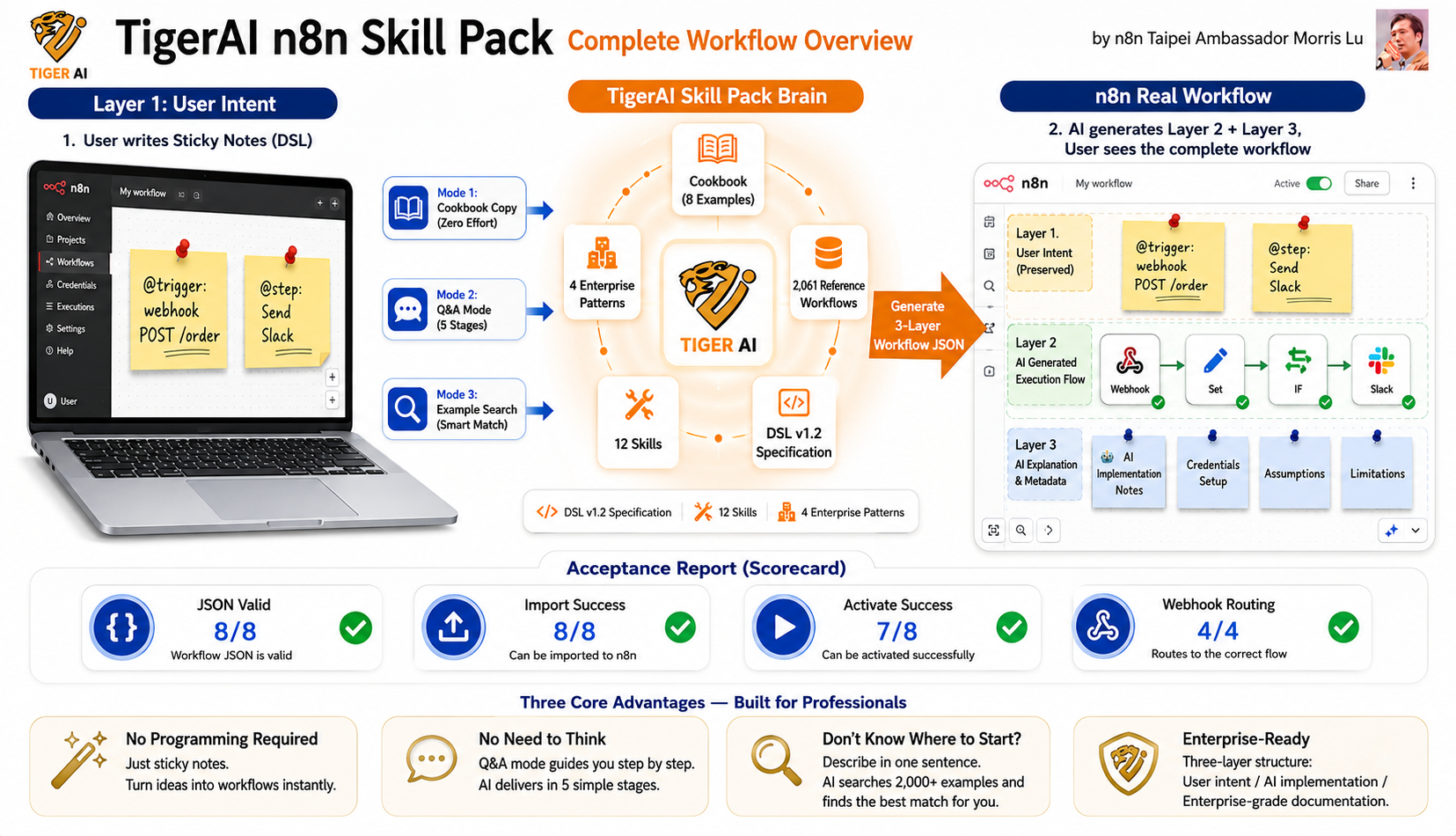
This blog post dives into TigerAI n8n Skill Pack, framing it as more than just another n8n workflow builder. It emphasizes how the project blends human-AI collaboration into a solid, enterprise-ready system without requiring coding skills. The author highlights the project’s structured approach—starting with a simple yellow sticky note, generating a complete n8n pipeline, and integrating with n8n’s core features—while stressing compliance, scalability, and ease of use.
The piece breaks down the project’s architecture into digestible sections, such as the skills/ directory for Claude Code skills, the .agent/workflows/ for agentic orchestration, and the research/patterns.md for real-world reuse. It notes that the setup is minimal but requires manual installation via a command not explicitly listed in the README, urging readers to refer to the actual README for precise steps.
A key takeaway is the project’s focus on reproducible, audit-ready workflows, with a strong emphasis on documentation and automated validation via AI. The author suggests that while the tech is complex, the real value lies in how AI shapes the design, making it accessible even for non-technical users.
The post also addresses common concerns—like security with third-party components and the importance of understanding n8n’s ecosystem—while staying anchored to the facts in the README. It positions the project as a useful reference for teams evaluating agentic engineering tools.
A notable structural note: the README is organized in a logical flow—description → usage modes → practical examples → installation guidance—making it easy to skim. The tone remains professional yet approachable, avoiding overly technical jargon while still delivering actionable insights.
For readers interested, the article ends with a clear directive: follow the README link for setup instructions, and explore the GitHub repo to dive deeper into the codebase. This approach ensures readers grasp both the big picture and the technical underpinnings.
Comments