Universal crypto-first platform for payments, subscriptions and software license management.
ADAMANT Payment (adamant-payment) is a self-hostable platform that combines authentication, billing, crypto payments, subscriptions, license management, a customer portal, and an operator admin console — in one product-neutral solution.
No need to stitch together Stripe, a licensing SaaS, and custom auth. Built for Web3 projects, trading bots, desktop apps, and SaaS products that sell to a global audience and accept Bitcoin, ADAMANT, and other cryptocurrencies.
Note: This repository is the public home for the project overview, roadmap, and community discussion. The application source code is maintained in a private repository and is not open source.
Interested in using ADAMANT Payment? Contact us
Related: Community discussion · Release tracking (#1)
Why ADAMANT Payment
Crypto-first by design
Cryptocurrency payments are a first-class feature — not a bolt-on. BTCPay Server (BTC), ADM-native on-chain deposits, and extensible payment providers fit naturally into checkout and settlement flows.
All-in-one platform
Auth, billing, payments, subscriptions, license management, user portal, and admin panel in one stack. One deployment, one data store, one integration surface for your product.
Built-in licensing for software
Licenses are issued automatically after payment. Manage expiration, plans, trials, and promo codes. External apps — bots, relays, desktop clients — validate access through a dedicated API.
Flexible sign-in: email or crypto-only
Users sign in with email + password, ADM message code, or Ethereum wallet (SIWE). Web3-friendly flows without mandatory email identity.
Included frontend and admin panel
Customers manage payments, licenses, and subscriptions. Operators manage accounts, orders, plans, wallets, and access rights from a separate admin console.
Universal and product-independent
Not tied to ADAMANT Messenger or any single app. White-label branding via environment configuration. Generic product slugs in the data model.
API-first architecture
REST API under /v1/... for bots, SaaS backends, relays, and desktop applications. Check license status, subscription validity, and user access programmatically.
Self-host friendly and data-controlled
Deploy on your own infrastructure (PostgreSQL, Node.js). Full control over users, payment logic, licenses, and business data.
No dependence on closed platforms
Unlike Stripe, Paddle, Lemon Squeezy, or traditional licensing SaaS, ADAMANT Payment adapts to your crypto payment flows, pricing models, and product rules.
Security built in
Separate user and admin surfaces, protected authentication, secure license validation APIs, optional ADM 2FA and ETH 2FA for operators, captcha, rate lockout, and audit logging.
User portal
Sign in with email, ADM, or Ethereum wallet. Browse plans, pay with crypto, and manage scoped licenses.
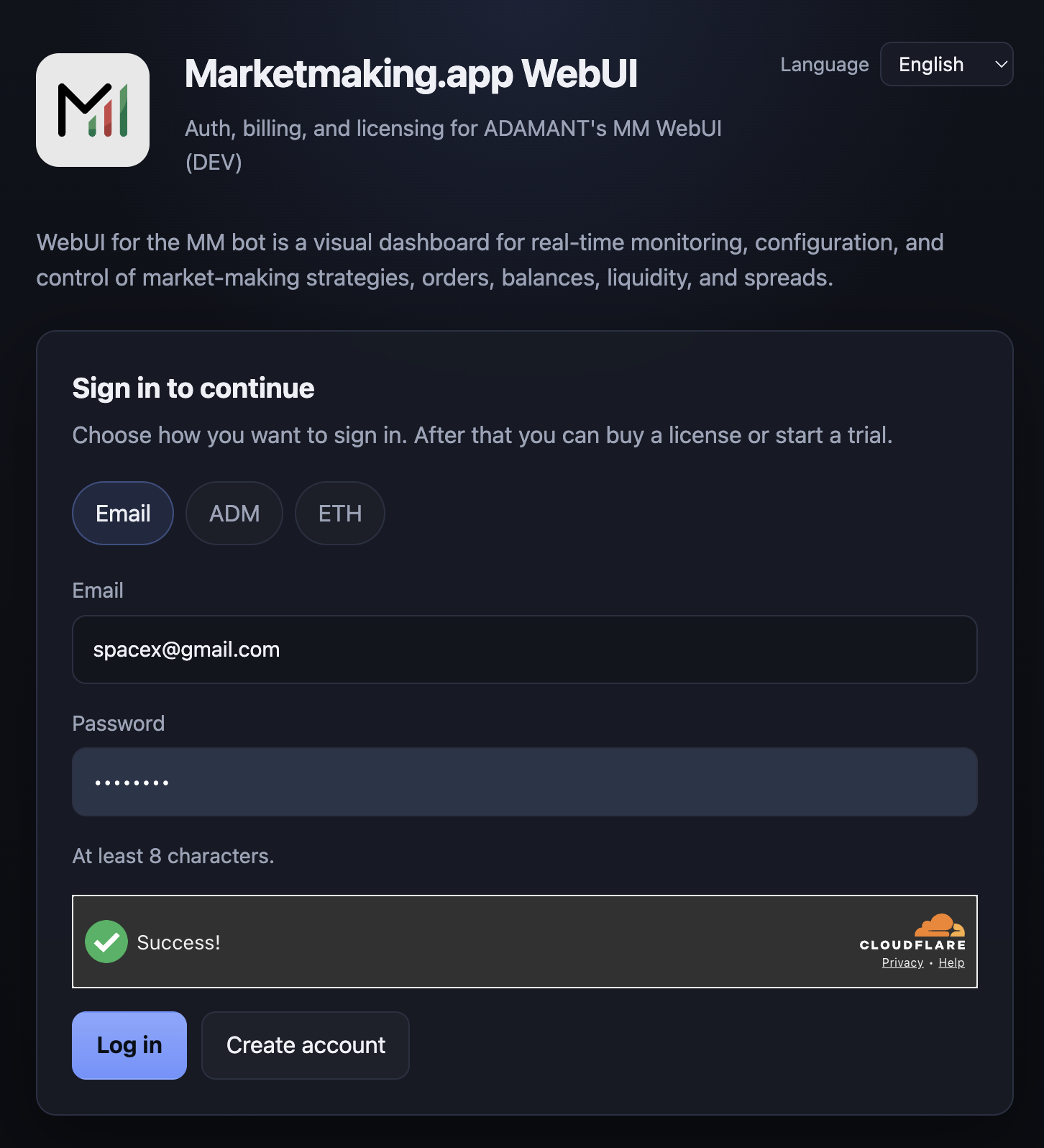
Sign-in screen: email, ADM message code, or Ethereum (SIWE) wallet authentication.
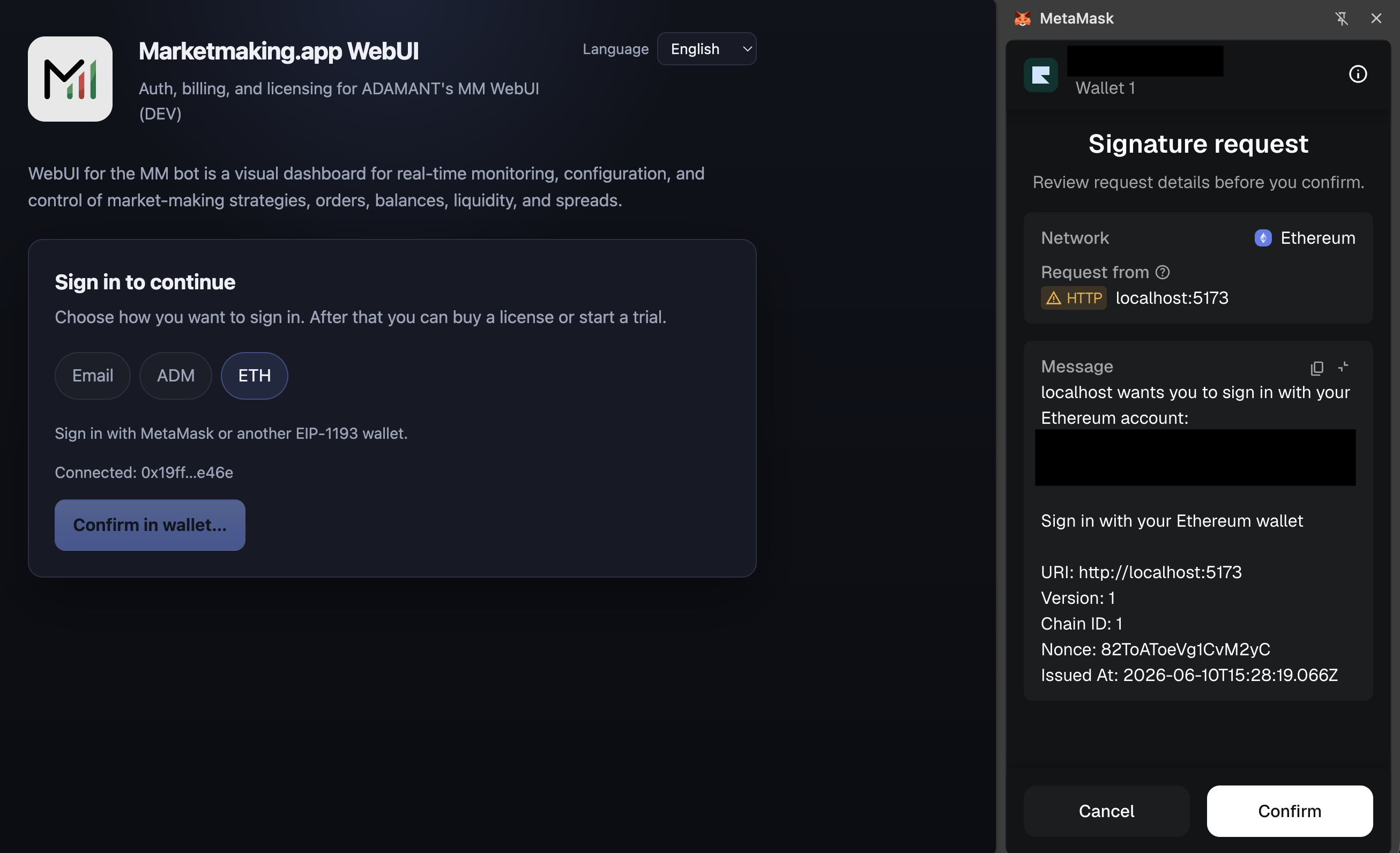
Ethereum sign-in via SIWE — connect wallet and sign a challenge message.
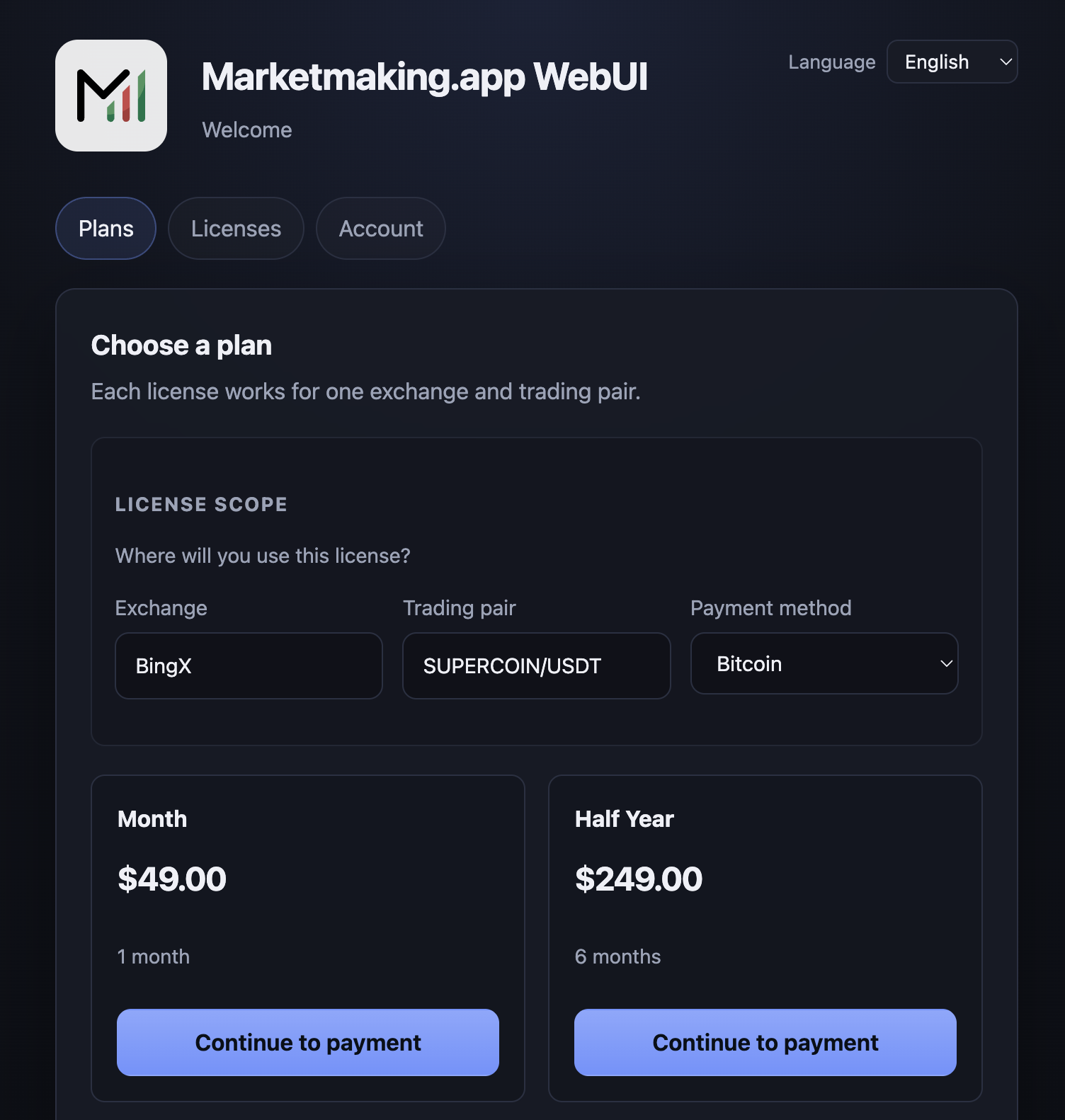
Product catalog with configurable paid plans and exchange / trading-pair scope.
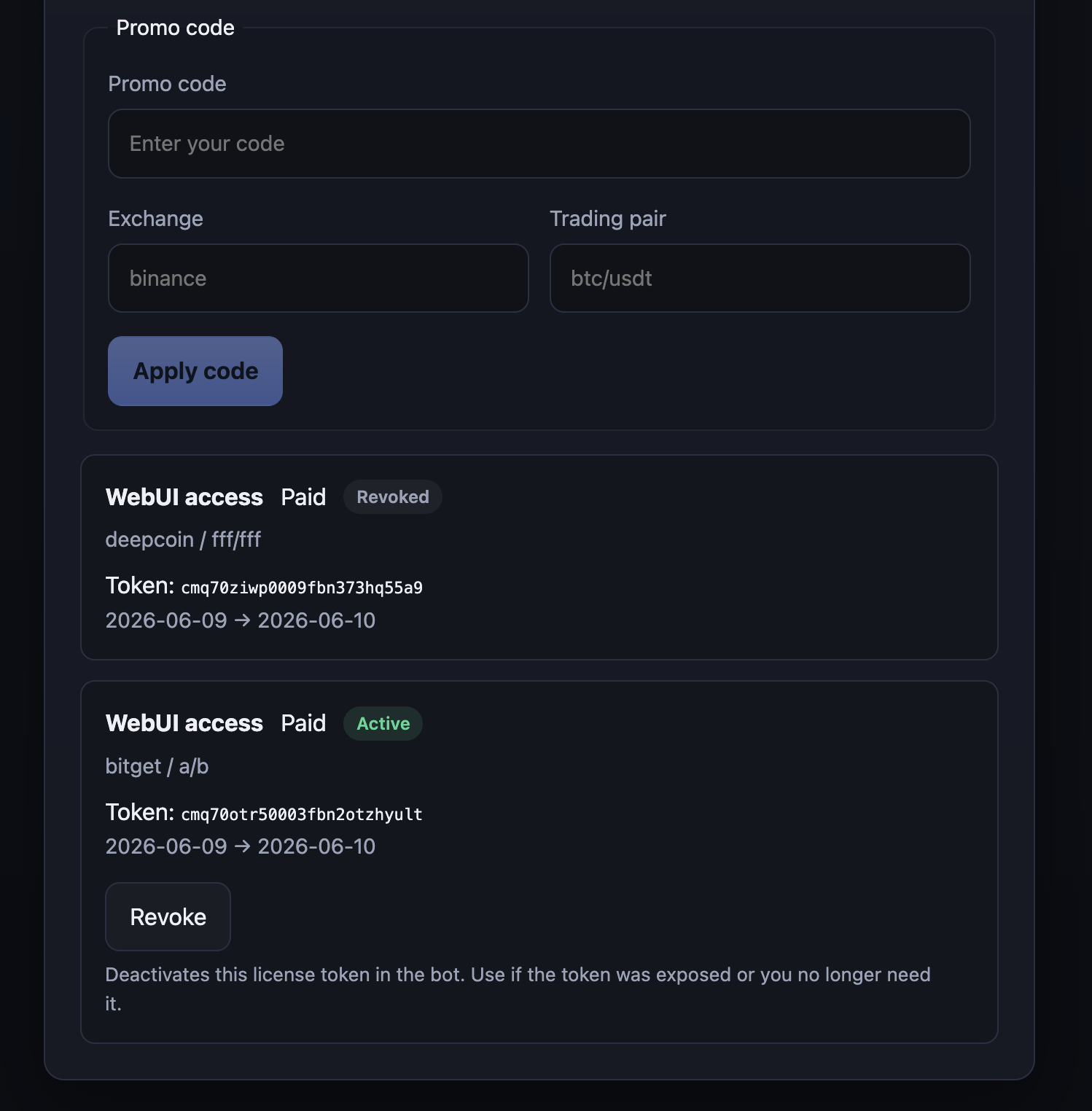
Customer view: active licenses, trial claims, and subscription status.
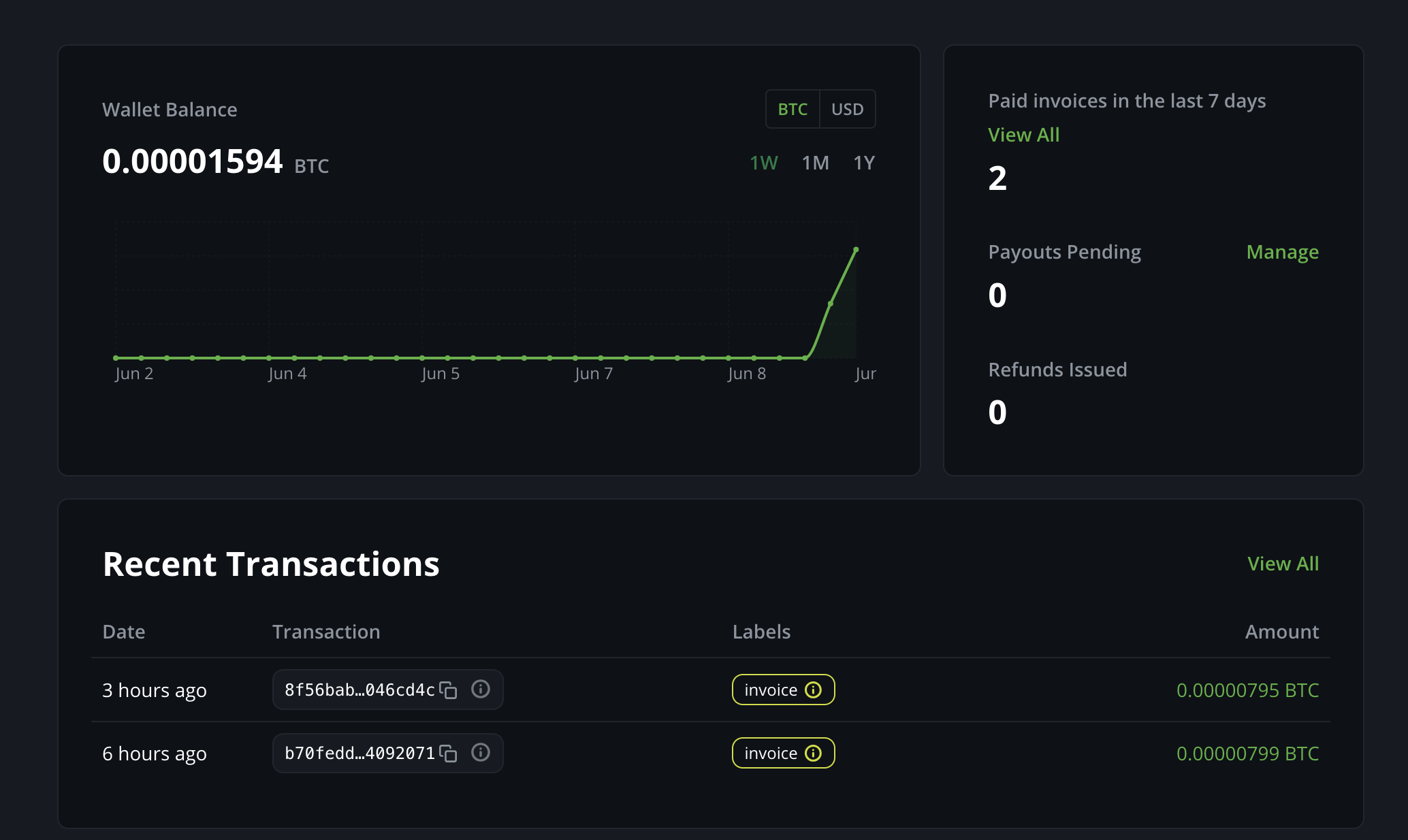
Crypto checkout via BTCPay Server — BTC invoice linked to license issuance.
Operator admin console
Full operator dashboard for accounts, licenses, invoices, and payment wallets. Deploy on a separate origin in production.
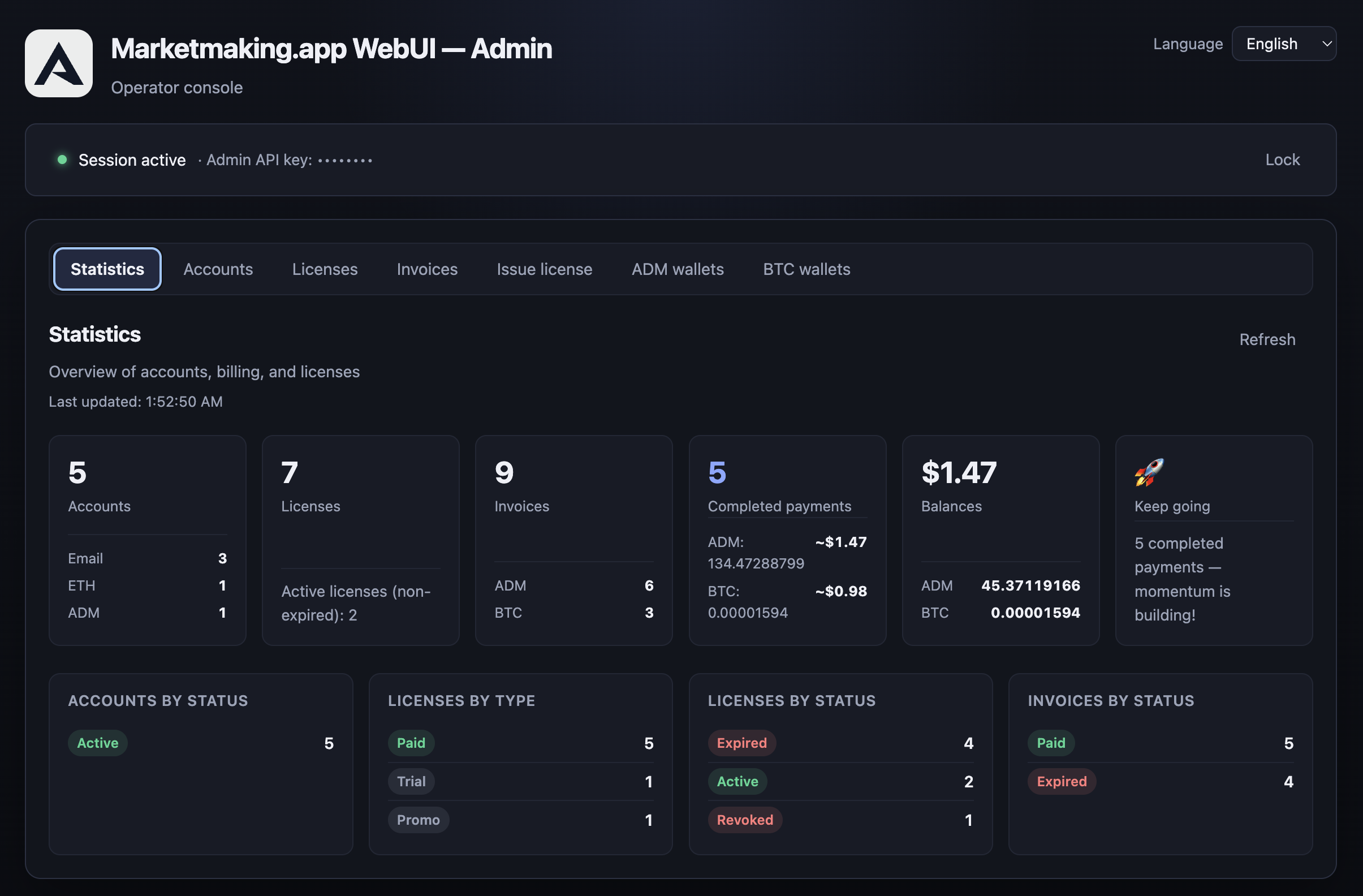
Admin dashboard: revenue metrics, license counts, and ADM/BTC wallet balances.
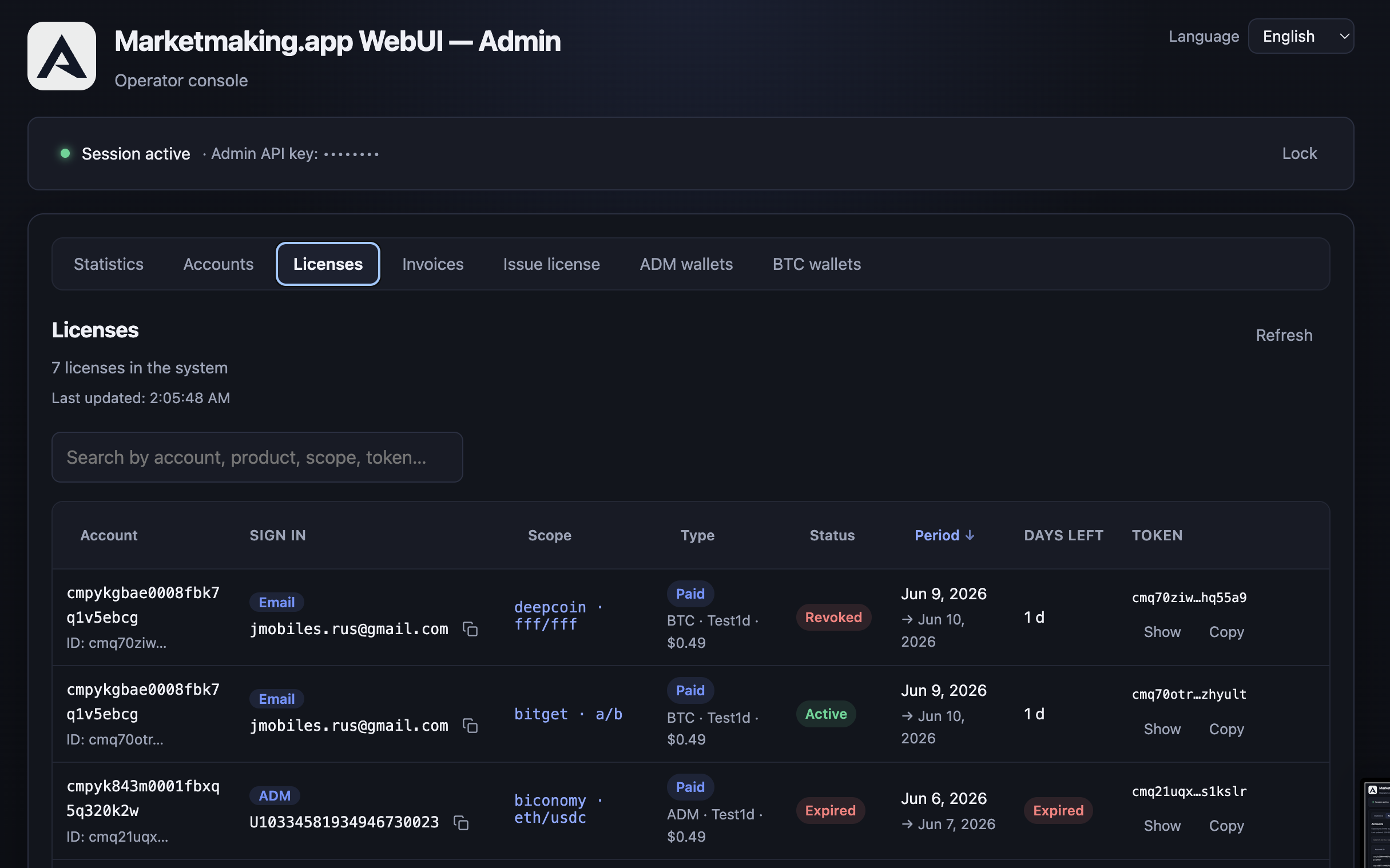
Operator license list with filters, manual issuance, and payment metadata.
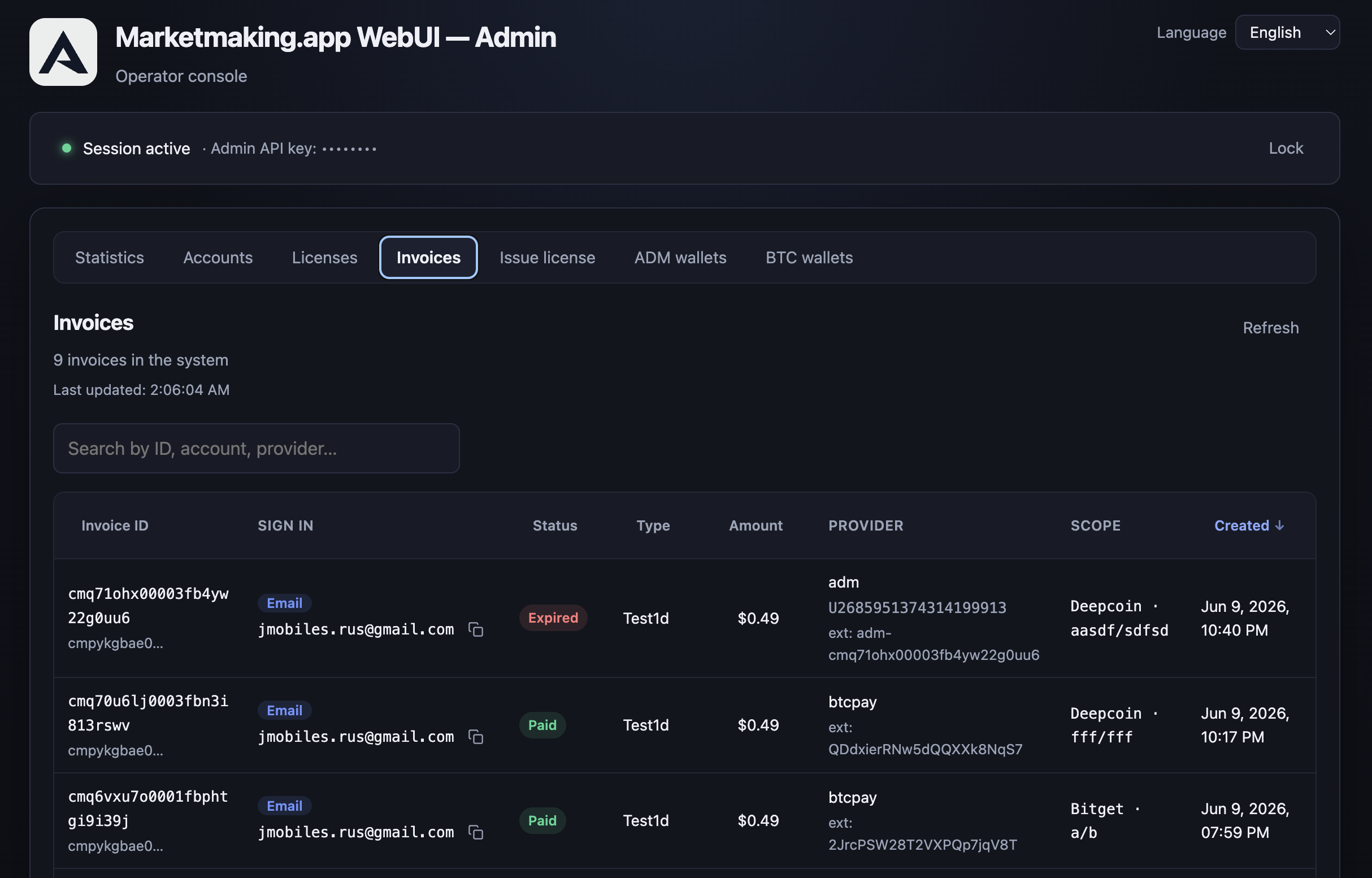
Paid and pending invoices across accounts and payment providers.
Use cases
| Scenario | Description |
|---|---|
| SaaS / bot subscription | User registers, pays in crypto, receives a license token; your app validates access via API |
| Trading bot WebUI (scenario B) | Customer buys subscription on ADAMANT Payment; bot connects outbound to a public WebUI relay |
| Trial → paid conversion | Time-limited trial per product scope; upgrade through checkout extends or replaces the license |
| White-label product | Rebrand UI and API responses for your product; same core platform |
| Self-hosted monetization | Run billing on your VPS; no third-party holds your customer or payment data |
First production integration: ADAMANT Tradebot WebUI subscription (adamant-tradebot).
v1.0 highlights
| Area | Included in v1.0 |
|---|---|
| Auth | ADM code, Ethereum (SIWE), email + password; JWT + refresh cookies; Turnstile captcha |
| Billing | Catalog, trial (14 days), paid / promo / manual licenses; hot-reload plan and promo config |
| Payments | BTCPay Server (BTC), ADM-native (unique deposit address + watcher), dev provider |
| Admin | Stats, accounts, licenses, invoices, ADM/BTC wallets; API key + optional 2FA; en/ru i18n |
| Web | Sign-in, catalog, checkout, license management; en/ru i18n; branding |
| CI | GitHub Actions — build, lint, typecheck |
Full scope and release checklist: Issue #1.
Contact
Planning to integrate ADAMANT Payment into your product, bot, or SaaS?
Get in touch → adamant.business/contact
We welcome feedback on payment providers, licensing models, and integration scenarios in the community discussion.
Technical overview
Architecture and stack (for developers)
Monorepo layout
adamant-payment/
├── apps/
│   ├── api/          # Fastify 5 + Prisma + PostgreSQL — source of truth
│   ├── web/          # End-user UI (login, plans, checkout, licenses)
│   └── admin/        # Operator UI (separate deploy / IP allowlist)
├── packages/
│   └── shared/       # Zod schemas, types, API client, i18n
└── config/           # Hot-reloaded paid plans, promo codes, exchanges
Stack
| Layer | Technology |
|---|---|
| Runtime | Node.js ≥ 20.19 |
| Monorepo | pnpm workspaces + Turborepo |
| API | Fastify 5, TypeScript, Prisma, PostgreSQL |
| Frontends | Vite + React 18 (web and admin as separate apps) |
| Shared | Zod validation, typed API client, i18n (en / ru) |
Core data model
- Account + AuthIdentity (
adm|eth|email) - Product, Plan, Price, Subscription, Invoice, Payment
- License — scoped token (
trial|paid|promo|manual); optionalexchange+pairscope - Pluggable PaymentProvider — BTCPay, ADM-native, dev (local simulate)
API conventions
- JSON REST under
/v1/... - Health:
GET /health - Auth: JWT access + httpOnly refresh cookie
- Errors:
{ "error": "CODE", "message": "..." } - License validation endpoint for relays and external products
Platform integration (ADAMANT Tradebot)
| Repo | Role |
|---|---|
| adamant-payment | Auth, billing, payments, license validation |
| adamant-tradebot | Bot REST/WS API |
| adamant-tradebot-webui | Public WebUI + relay (socket.io tunnel) |
Scenario A: Self-hosted WebUI — browser talks to bot API directly.
Scenario B: User buys on ADAMANT Payment → license in bot config → bot connects outbound to relay → browser uses public WebUI.
Design principles
- Security — no secrets in logs; Zod input validation; idempotent webhooks
- Correctness — license scope enforced on issue and validate; trial once per scope globally
- Neutrality — no hardcoded product names in DB enums; configurable branding
- Self-host — Docker Compose for Postgres; no mandatory cloud dependencies
Post-v1 roadmap
- Subscription renewal automation
- Additional payment providers and chains
- OpenAPI documentation
- Third-party product integrations beyond Tradebot
Comments